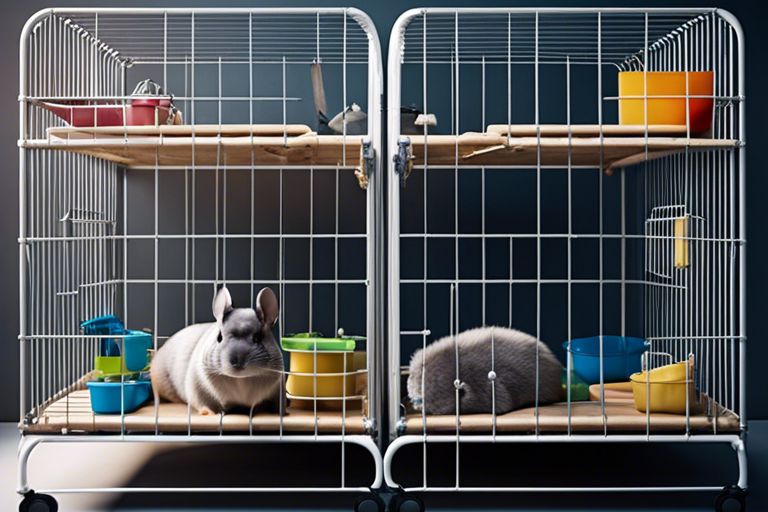
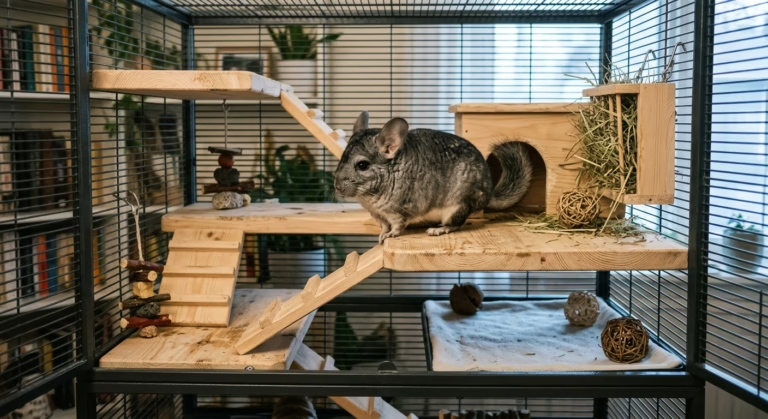
What kind of cage should a chinchilla have? The best chinchilla cage is large, secure, well ventilated, and built for climbing, jumping, chewing, and daily exercise. Chinchillas are active and agile, so a small single-level cage is not a good long-term setup.
Current veterinary and welfare guidance focuses less on one universal cage size and more on providing enough usable space, safe flooring, hiding places, climbing opportunities, and supervised exercise. The exact setup should also suit the number of chinchillas you keep.
What Makes a Good Chinchilla Cage?
- Large and multi-level: Chinchillas need room to run, jump and climb.
- Secure: The enclosure must prevent escapes and keep feet and legs from becoming trapped.
- Safe flooring: Provide solid resting areas so the feet are not forced to stand on wire mesh continuously.
- Good ventilation: Keep the cage dry and well ventilated, away from heat and excessive humidity.
- Hiding places: Your chinchilla should always have somewhere safe to retreat and rest.
- Chew-safe materials: Chinchillas chew, so avoid toxic wood and plastic that can be swallowed.
How Big Should a Chinchilla Cage Be?
There is no single cage dimension that every veterinary source treats as the universal minimum. VCA gives an example of about 3 × 2 × 3 feet for one chinchilla and a larger enclosure for a pair, while the RSPCA emphasizes a large enclosure with substantial horizontal and vertical space.
For practical planning, choose the largest safe enclosure you can provide rather than treating one number as a target. More usable space is especially valuable because chinchillas are active animals that need opportunities to jump and run.
What About Wire-Mesh Floors?
Wire mesh can make cleaning easier, but a chinchilla should not have to stand on wire all the time. Merck recommends a solid area where the animal can rest its feet, and the RSPCA also warns that spending long periods on wire mesh can damage the feet.
If you use a wire enclosure, make sure the openings are small enough to prevent legs from becoming trapped. Merck’s current guidance gives a maximum opening of about 1 × 2 inches on the sides and ½ × ½ inch on the bottom.
Levels, Shelves and Jumping Space
Platforms, ramps and multiple levels can make a cage much more useful, but height must be managed safely. The RSPCA recommends horizontal and vertical space while avoiding uninterrupted heights greater than about 60 cm.
What Should Be Inside the Cage?
- Hay: Keep high-quality grass hay available at all times.
- Food and water: Provide appropriate chinchilla pellets and fresh water.
- Hide: Offer a secure box, tube or other chinchilla-safe hiding place.
- Chew toys: Use safe untreated wood and other chinchilla-appropriate chew items.
- Exercise: A safe solid-surface chinchilla wheel can provide additional exercise.
- Dust bath: Provide chinchilla-specific dust for regular grooming and remove the bath after the session.
Where Should the Cage Be Kept?
Keep the enclosure indoors in a dry, well-ventilated area away from direct sunlight, radiators, and other heat sources. Chinchillas are particularly sensitive to heat; veterinary guidance recommends keeping their environment below about 80°F (27°C).
The cage should also be in a relatively quiet area. Chinchillas are prey animals with sensitive hearing and can become stressed by sudden or unfamiliar noise.
What Cage Materials Should You Avoid?
- Plastic-coated wire that your chinchilla can chew through
- Untreated or chemically treated wood
- Large wire openings where a foot or leg could become trapped
- Unsafe wheels with gaps, rough surfaces or exposed mechanisms
- Plastic exercise balls, which are too restrictive and can cause injury
How Much Exercise Does a Chinchilla Need?
A good cage does not replace exercise. Merck recommends daily supervised exercise outside the cage, while safe in-cage climbing, jumping and wheel use can add activity. Make any out-of-cage area chinchilla-proof because these animals readily chew wires, furniture and other household objects.
Quick Chinchilla Cage Checklist
| Feature | What to look for |
|---|---|
| Size | Large enough for climbing, jumping and movement |
| Floor | Safe solid resting areas; no unsafe wide mesh |
| Levels | Secure platforms with no dangerous drops |
| Ventilation | Dry, well ventilated and away from heat |
| Hiding | Secure retreats; more when housing multiple chinchillas |
| Chewing | Safe untreated wood and appropriate chew toys |
| Exercise | Daily supervised exercise plus safe in-cage activity |
Frequently Asked Questions
How big should a chinchilla cage be?
Choose a large enclosure with plenty of usable horizontal and vertical space. VCA gives about 3 × 2 × 3 feet as an example for one chinchilla, but cage size should not be treated as the only measure of welfare.
Can chinchillas live in a wire cage?
Yes, a suitable wire-mesh cage can work, but the mesh must be safe and the chinchilla needs solid resting areas to protect its feet.
Do chinchillas need multiple levels?
Multiple levels can provide useful climbing and jumping opportunities, provided platforms are secure and the enclosure does not create dangerous falls.
Where should I put a chinchilla cage?
Keep it indoors in a dry, well-ventilated, temperature-controlled area away from direct sun, heat sources and excessive noise.
Bottom Line
The best chinchilla cage is not simply the biggest box you can buy. It is a secure, well-ventilated enclosure that gives your chinchilla room to move, safe places to climb and hide, solid areas for resting, and protection from heat and injury. Build the setup around the animal’s behavior and welfare rather than a single cage-size number.
Research & further reading: Merck Veterinary Manual, VCA Animal Hospitals, and RSPCA housing guidance.