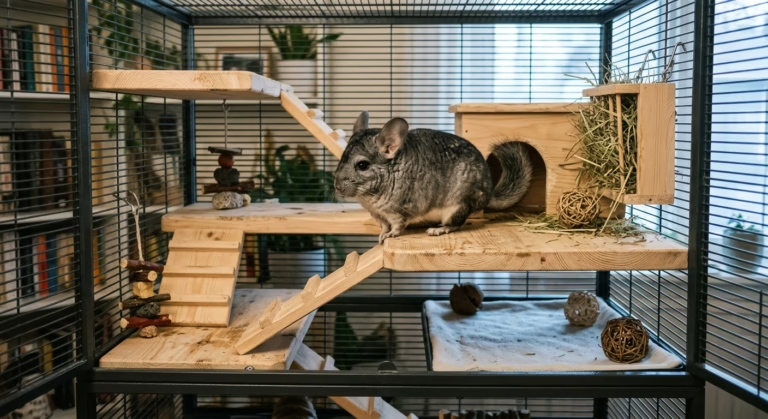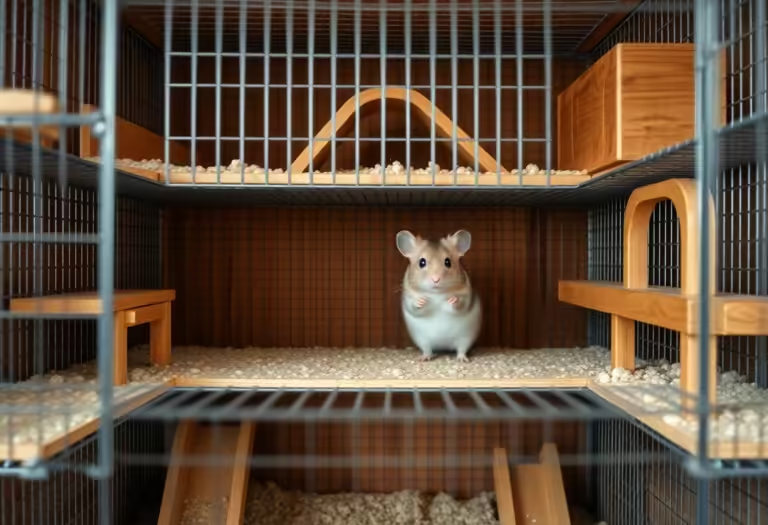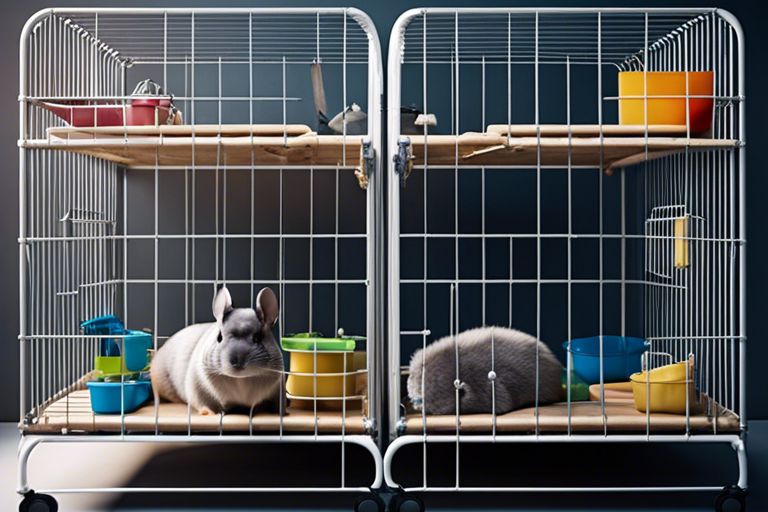
What does a chinchilla actually need inside its cage? The goal is not to fill the enclosure with accessories. A good setup provides safe places to rest, hide, climb, chew, exercise, bathe, eat and drink while avoiding common hazards.
Current veterinary and welfare guidance emphasizes a large secure enclosure, solid resting areas, safe enrichment, a dust bath, clean food and water, and protection from heat and dangerous materials.
Quick answer: Chinchilla cage accessories checklist
- Solid resting areas such as secure platforms or shelves.
- Hiding places such as a suitable box or tunnel.
- Safe chew items made from appropriate untreated materials.
- A large solid-surface exercise wheel designed for chinchillas.
- A dust-bath container for chinchilla-specific dust.
- Hay, food and water equipment that is stable and easy to clean.
- Safe ramps, branches and climbing areas arranged without dangerous falls.
1. Solid platforms and resting areas
Platforms are useful because chinchillas are active climbers, but they also need places to rest without standing continuously on wire. Merck Veterinary Manual recommends large cages with multiple levels, ramps and climbing opportunities, and says chinchillas need a solid area for resting. The RSPCA similarly recommends solid platforms at different levels.
Choose stable platforms with no sharp edges, loose hardware or dangerous gaps. Avoid creating one tall uninterrupted drop; the RSPCA recommends avoiding uninterrupted heights greater than 60 cm.
For the overall enclosure, see our chinchilla habitat setup guide.
2. Hides, nest boxes and tunnels
Chinchillas need places where they can retreat, rest and feel secure. Merck lists cardboard boxes, wood and appropriately sized PVC tubing as possible hiding structures. The RSPCA recommends constant access to nest boxes and hiding places.
Choose a hide large enough for your chinchilla to enter and turn around comfortably. Inspect it often for chewing damage, sharp edges, loose pieces or contamination. If multiple chinchillas share a cage, provide enough hiding and resting places for each animal.
3. Chew toys and safe wood
Chewing is normal chinchilla behavior. Safe chew items provide enrichment and appropriate opportunities to gnaw. VCA recommends pet-safe wood blocks and non-toxic commercially available branches such as suitable applewood sticks, while Merck recommends chew and wooden toys.
- Use untreated, pet-safe wood.
- Avoid paint, pesticide treatment and questionable finishes.
- Do not use toys with small detachable pieces.
- Replace items when they become dangerously damaged or contaminated.
4. Exercise wheel: choose safety over novelty
A properly designed wheel can provide useful exercise. Merck recommends a 15-inch running wheel with a smooth surface and warns against wheels with holes or rough surfaces because feet and legs can be injured. VCA also recommends a 15-inch solid-floor wheel and warns about open-track or wire designs that can trap feet.
Avoid wire or open-track wheels, rough running surfaces, damaged wheels and undersized designs. Merck also specifically advises against plastic exercise balls because they can be too small and may roll unpredictably.
5. Dust-bath container
Dust bathing is an important part of chinchilla grooming. Use a stable shallow container with dust specifically intended for chinchillas. Merck recommends a short daily bath and removing the dust afterward so it does not become contaminated. The RSPCA similarly recommends a shallow tray and cleaning or sieving the dust after use.
See our guide to chinchilla dust baths for more detail.
6. Hay holder, food bowl and water system
Accessories should support a hay-centered diet rather than encourage unnecessary treats. A hay holder can help keep hay accessible and cleaner. Use a stable food dish that is easy to wash and difficult to tip.
Fresh water should always be available. A water bottle can reduce contamination compared with an open bowl, but any system must be checked regularly to ensure it is working and clean. See our veterinary diet guide for the bigger feeding picture.
7. Ramps, branches and climbing structures
Chinchillas are agile, so appropriately arranged ramps, branches and platforms can make useful use of vertical space. Merck recommends multiple levels, ramps and climbing opportunities, while the RSPCA recommends branches and solid platforms at different levels.
The goal is not maximum height. It is secure movement between useful levels. Check every accessory for stability and avoid layouts that create a long fall.
8. Temperature and cooling
Cooling accessories cannot make an unsafe room temperature safe. Chinchillas are sensitive to heat. Merck notes that temperatures above about 26.7°C (80°F), particularly with high humidity, can cause heatstroke; VCA likewise emphasizes keeping chinchillas cool and below 80°F (27°C).
A cool ceramic or stone resting surface can be useful during warm conditions, but it should not replace air conditioning, ventilation or moving the cage to a cooler environment when temperatures are unsafe. See our safe-temperature guide.
9. Bedding and cage flooring
Bedding needs to be safe, comfortable, absorbent and appropriate for the enclosure. Merck lists kiln-dried pine and recycled paper among suitable bedding options. VCA recommends paper-based bedding or fleece liners and warns against cedar and pine shavings because of respiratory irritation concerns.
Provide solid resting areas and keep the enclosure clean. Avoid fluffy nesting materials that separate into long strands; the RSPCA warns these can tangle around chinchillas.
10. Cleaning supplies
Keep simple supplies available for removing soiled material, washing food and water equipment and maintaining the enclosure. Merck’s care checklist calls for fresh water and hay daily, regular cleaning of food and water systems, daily bedding attention and regular full cage cleaning. VCA also recommends regular cleaning of cages, bowls, water bottles and toys.
Accessories to avoid
- Plastic exercise balls — specifically discouraged by Merck.
- Wire or open-track wheels — feet can become trapped.
- Plastic-coated cage parts — chinchillas may chew the coating.
- Unsafe or chemically treated wood — use known pet-safe materials.
- Fluffy, string-like nesting materials — these can tangle around animals.
- Toys with small detachable parts — replace damaged items promptly.
- Dangerous climbing layouts — avoid long, uninterrupted falls.
How to prioritize your purchases
- Safe enclosure and solid resting areas
- Hay, food and reliable fresh water
- A secure hiding place
- Dust-bath container and chinchilla dust
- Safe chew enrichment
- A properly designed exercise wheel
- Additional platforms, ramps, branches and enrichment
You do not need to buy every product marketed for chinchillas. Prioritize accessories that solve a genuine welfare or safety need.
Research & further reading
- Merck Veterinary Manual — Providing a Home for a Chinchilla
- RSPCA — Creating a Good Home for Chinchillas
- RSPCA — Caring for Pet Chinchillas
- VCA Animal Hospitals — Chinchillas: Housing
- Merck Veterinary Manual — Chinchilla Care Checklist