Chinchillas need a simple, high-fiber diet. The safest way to think about feeding is not as a long list of “safe” and “toxic” foods, but as a hierarchy: grass hay forms the foundation, an appropriate chinchilla pellet provides supplemental nutrition, fresh water is always available, and other foods are limited according to veterinary guidance.
Key Takeaways
- Grass hay: The foundation of the diet and available at all times.
- Chinchilla pellets: Use an appropriate, complete species-specific pellet as a supplement.
- Fresh water: Clean drinking water should always be available.
- Fresh vegetables: Guidance differs; some veterinary sources allow selected greens, while NCS advises avoiding them. Follow an exotic vet’s advice.
- Fresh fruit: Not required; veterinary and NCS guidance differs, so the conservative choice is to avoid it unless your exotic vet advises otherwise.
- Avoid nuts, seeds and grains: Merck and VCA specifically advise against these foods.
- Dried fruit: Guidance differs between sources, so do not treat online food charts as universal rules.
Safe and Unsafe Foods for Chinchillas
Instead of calling foods simply “safe” or “unsafe,” use the table below as a practical evidence guide. The reason for avoiding a food matters: some are specifically discouraged by veterinary sources, while others simply lack enough chinchilla-specific evidence.
| Food category | Evidence-based approach |
|---|---|
| Grass hay | Foundation; keep available at all times. |
| Chinchilla pellets | Use an appropriate complete pellet as a supplement. |
| Fresh water | Available continuously and kept clean. |
| Fresh vegetables | Guidance differs: some veterinary sources allow selected greens; NCS advises avoiding them. Ask an exotic vet. |
| Fresh fruit | Not required; Merck/VCA allow limited examples, while NCS advises avoiding fruit. Prefer avoiding unless your vet advises otherwise. |
| Nuts and seeds | Avoid; veterinary sources advise against them. |
| Grains | Avoid as a routine food. |
| Dried/dehydrated fruit | Merck/VCA advise avoiding; RSPCA guidance differs. |
| Processed human foods | Do not use as routine chinchilla treats. |

Core Foods and Suitable Extras
Hay and Grass
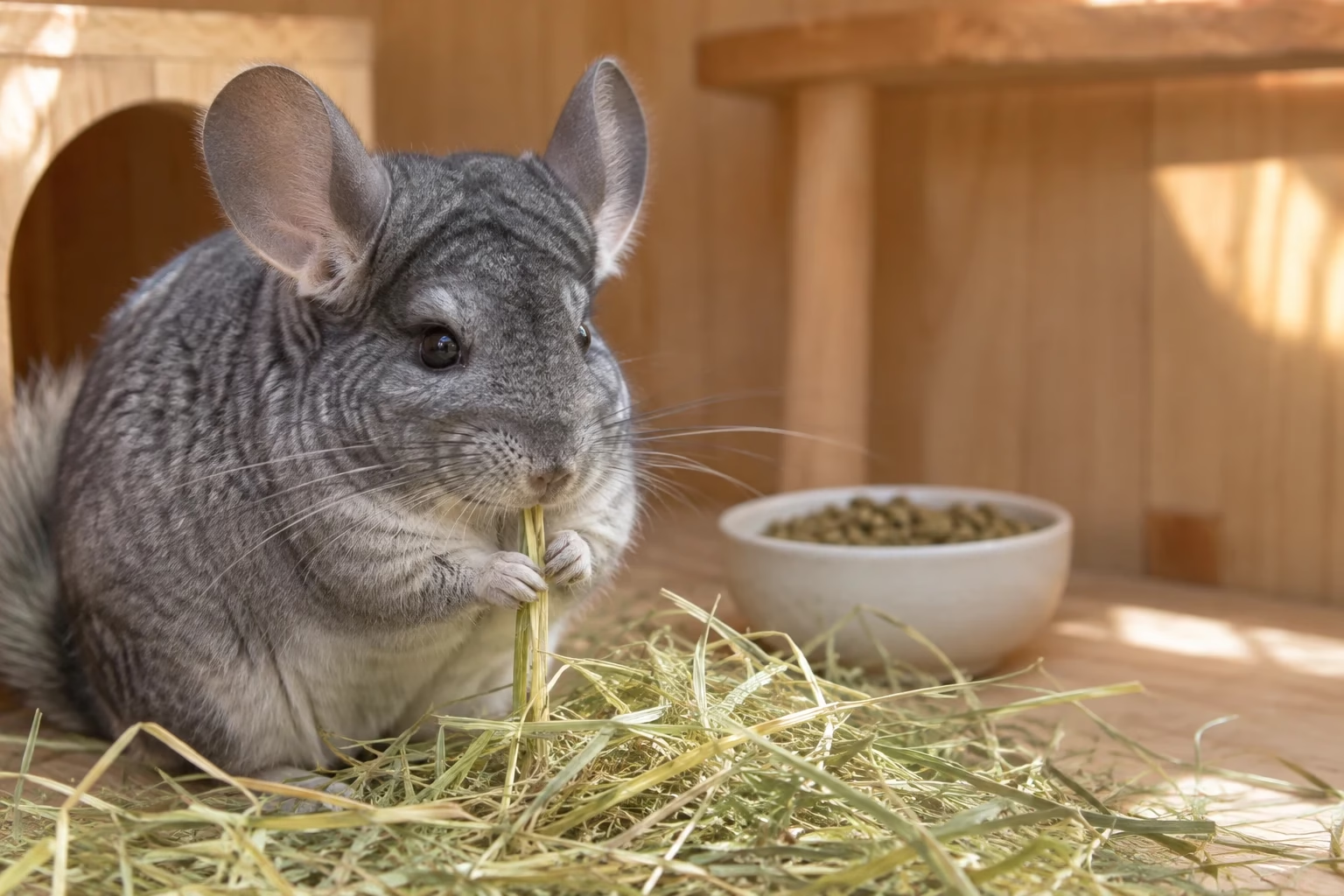
Fresh grass hay should be available every day and should form the foundation of feeding. Timothy hay is specifically highlighted by veterinary guidance, while VCA also lists orchard, botanical, oat and meadow hay as suitable grass-hay options. Hay provides fiber and encourages chewing, which is important for continuously growing teeth. See our detailed chinchilla diet guide.
Fresh Vegetables
Veterinary sources do not give one universal answer about fresh produce. Merck, VCA and NC State Veterinary Hospital describe selected greens or vegetables in small amounts, while the National Chinchilla Society (UK) advises against fresh vegetables and fruit. Because this is a genuine difference in published guidance, do not assume every chinchilla should receive produce. Merck lists dark green lettuce, bell peppers, carrot tops and celery among foods that can be offered. Merck’s care checklist gives about 1 teaspoon of fresh vegetables as a general daily guideline, but this should not be treated as a universal prescription for every chinchilla or every vegetable. If your exotic-animal veterinarian recommends introducing a particular green or vegetable, introduce only one new item slowly and monitor droppings and appetite. The NCS takes a stricter position and recommends no fresh vegetables or fruit; owners should not suddenly add produce to a chinchilla accustomed to a hay-and-pellet diet.
Merck also advises avoiding high-calcium vegetables such as kale, parsley and dandelion greens, and says carrots should be offered only rarely because they contain a lot of sugar.
Pellets
A small amount of a complete pelleted diet formulated for chinchillas can supplement hay. Veterinary guidance commonly describes about 1–2 tablespoons per chinchilla per day, although individual needs vary. Do not rely on an arbitrary fiber percentage as the only way to judge a pellet; use a nutritionally appropriate species-specific product.
Choose a plain, complete pellet formulated specifically for chinchillas, without added seeds, nuts or dried fruit, and use a measured portion alongside unlimited grass hay. Merck, VCA and NC State Veterinary Hospital commonly describe about 1–2 tablespoons per adult chinchilla per day, but individual needs vary with age, health and body condition. The NCS also warns against mixed or muesli-style foods because selective feeding can leave an unbalanced diet. Remove stale or contaminated food and monitor daily appetite rather than continually topping up the bowl.
Occasional Treats
Treats are optional, not a nutritional requirement. Guidance differs: Merck and VCA describe limited fresh produce, while the National Chinchilla Society (UK) advises against fresh fruit and vegetables. For dried fruit, Merck and VCA advise avoiding it, whereas the RSPCA and PDSA list limited dried-fruit treats. Given these differences, the most conservative approach is to avoid sugary treats and ask an exotic-animal veterinarian before offering fruit or dried fruit. Never make treats a significant part of the diet.
Foods to Avoid
Veterinary-Supported Avoidances
Do not rely on broad internet “toxic food” lists. The veterinary sources reviewed for this guide specifically advise avoiding nuts, seeds and grains, and they caution against unsuitable high-carbohydrate or sudden dietary changes.
- Nuts and seeds: Merck, VCA and RSPCA advise against them.
- Grains: VCA advises against feeding grains.
- Processed human foods: Do not use sugary, salty or fatty snack foods as routine treats.
- Dried/dehydrated fruit: Merck and VCA advise avoiding it, while RSPCA guidance differs.
Why Human Snack Foods Are a Poor Fit
Human snack foods are not a substitute for a chinchilla diet. Avoid building treats around sugary, salty, fatty or highly processed foods. The important distinction is between a food being nutritionally unsuitable and a food having proven species-specific toxicity.
- Sugary snacks: Candy, baked goods
- Fatty foods: Potato chips, fried items
- Processed foods: Bread, pasta
What About Fruit?
Fruit is optional rather than a nutritional requirement. Merck gives fresh apple or pear as examples of occasional treats, while VCA mentions a small piece of high-fiber fruit such as apple. Individual fruits should be evaluated separately rather than placed into a universal “safe fruit” list. The National Chinchilla Society (UK) recommends avoiding fresh fruit altogether, so the conservative approach is to leave fruit out unless an exotic-animal veterinarian advises otherwise. For detailed fruit guidance, see our evidence-based fruit guide.
How to Introduce a New Food
- Keep the normal diet stable. Hay and the usual appropriate diet should remain the foundation.
- Introduce one new food at a time. Merck recommends introducing new foods slowly over several days.
- Start with a small amount. A new food should not displace hay or the normal diet.
- Watch eating and droppings. Changes can be an early sign of digestive or other health problems.
- Stop and contact a veterinarian if concerning signs appear. Reduced appetite, reduced or absent droppings, marked diarrhea, lethargy or other significant changes deserve veterinary attention.
There is no need for a complicated feeding schedule. Keep hay available, provide the appropriate pellet portion and fresh water, and make changes gradually. Exact treat schedules should not be invented when veterinary sources do not provide a universal rule.
Signs That a Food May Not Be Agreeing With Your Chinchilla
Chinchillas can develop digestive problems after inappropriate feeding or sudden dietary changes. Merck notes that inappropriate fresh greens, high-carbohydrate diets and sudden diet changes can be associated with diarrhea or soft feces.
Monitor appetite, drinking and droppings whenever you change the diet. RSPCA advises contacting a vet promptly if eating or drinking habits change or droppings become smaller or stop.
When a Food Change Becomes a Health Concern
A food-related problem should be assessed through physical signs rather than assuming that a change in mood proves a particular food is responsible. Watch for reduced appetite, fewer or absent droppings, marked diarrhea, lethargy, or other significant changes after a diet change.
Bottom Line
The best chinchilla diet is not a complicated menu. Build it around high-quality grass hay, supplement with an appropriate chinchilla pellet, provide fresh water, and use selected fresh foods only in ways supported by veterinary guidance. Avoid nuts, seeds and grains, introduce new foods gradually, and do not rely on internet “toxic food” lists without checking the evidence.
When a specific food is not clearly addressed by reliable chinchilla-specific sources, treat the evidence as uncertain and ask an exotic-animal veterinarian rather than guessing.
Frequently Asked Questions
Q: What should a chinchilla’s primary diet consist of?
Q: What foods should chinchillas avoid?
Q: Can chinchillas eat fresh vegetables?
Q: Can chinchillas have fruit as a treat?
Q: How much food should I feed my chinchilla daily?
Research & Further Reading
- Merck Veterinary Manual — Diet for a Chinchilla
- Merck Veterinary Manual — Chinchillas
- Merck Veterinary Manual — Routine Health Care for Chinchillas
- Merck Veterinary Manual — Chinchilla Care Checklist
- VCA Animal Hospitals — Chinchillas: Feeding
- RSPCA — What To Feed a Pet Chinchilla
- RSPCA — Chinchilla Health & Welfare Tips
- NC State Veterinary Hospital — Caring for Your Pet Chinchilla
- National Chinchilla Society (UK) — Guide to Keeping Pet Chinchillas