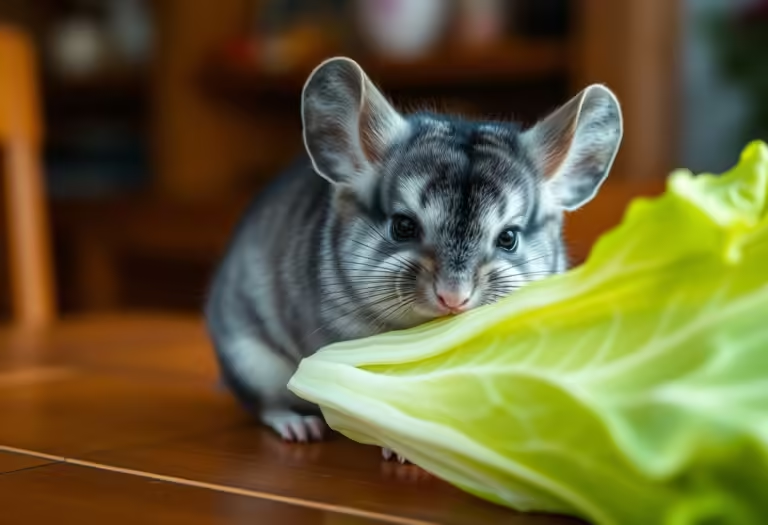
Can chinchillas eat lettuce? Yes, some veterinary guidance includes fresh dark green lettuce among vegetables that can be offered to chinchillas. The important point is that lettuce should be a small part of a much more fiber-focused diet, not a replacement for grass hay or a chinchilla-formulated pellet. There is also no good evidence for an internet rule such as “once a week” or a fixed thumb-sized portion for every chinchilla.
Quick answer
- Lettuce is not automatically unsafe. Merck Veterinary Manual specifically lists fresh dark green lettuce among vegetables that chinchillas can eat.
- Hay remains the foundation. Grass hay should be available freely because fiber supports digestion and normal tooth wear.
- Portion advice should not be invented. Merck’s care checklist gives about 1 teaspoon of fresh vegetables as general daily guidance, while its diet page uses broader wording for fresh dark green lettuce.
- Introduce new foods slowly. Chinchillas have sensitive digestive systems, and sudden dietary changes can cause soft feces or other gastrointestinal problems.
- Iceberg is not established as a poison. But the veterinary sources reviewed do not give iceberg lettuce a special recommendation, so there is no reason to make it a dietary staple.
What veterinary guidance says about lettuce
The Merck Veterinary Manual diet guide for chinchillas recommends a diet centered on long-strand grass hay, with chinchilla pellets and fresh foods used alongside it. It specifically says chinchillas can have fresh, dark green lettuce and some vegetables such as bell peppers, carrot tops and celery.
Merck’s chinchilla care checklist gives about 1 teaspoon of fresh vegetables as a general daily care guideline. This is useful context, but it is not a lettuce-specific prescription for every chinchilla. Individual diet needs can vary with age, health, existing diet and veterinary advice.
VCA’s chinchilla feeding guidance also emphasizes unlimited grass hay and says occasional fresh, low-calcium green vegetables can be offered. It advises making dietary changes gradually because chinchillas have sensitive digestive tracts.
Why lettuce should not replace hay
Lettuce contains water and provides some nutrients, but it does not perform the same role as long-strand grass hay. Hay supplies substantial fiber and gives chinchillas the prolonged chewing activity needed for their continuously growing teeth.
Merck explains that chinchillas have a high requirement for dietary fiber and that their diet should consist mainly of high-quality grass hay. The Merck chinchilla overview also emphasizes that grass hay should make up the main part of the diet, with pellets used as a supplement.
So the useful question is not simply “Is lettuce safe?” It is “Where does lettuce fit in the overall diet?” For a healthy pet chinchilla, lettuce is an optional fresh-food component, while hay remains the nutritional and dental foundation.
What about iceberg lettuce?
Iceberg lettuce is often described online as something chinchillas must never eat. The veterinary sources reviewed for this article do not establish iceberg lettuce as a specific toxin. They also do not provide a chinchilla-specific recommendation that makes iceberg an important food.
That distinction matters. A food can be a poor nutritional choice without being poisonous. Iceberg lettuce has a high water content and is less nutrient-dense than many darker leafy greens, but that does not justify claims that a small amount is inherently toxic to chinchillas.
If you are choosing a fresh vegetable, it makes more sense to follow veterinary guidance on appropriate fresh greens and keep the overall diet centered on hay rather than trying to build a diet around lettuce varieties.
How much lettuce can a chinchilla eat?
There is no strong evidence supporting a universal lettuce-specific portion such as “one leaf,” “a thumb-sized piece,” or “once per week.” Merck’s general care checklist mentions approximately 1 teaspoon of fresh vegetables per day, but that is a broader vegetable guideline rather than a prescription for lettuce alone.
For a chinchilla that has never eaten lettuce, introduce any new food gradually rather than suddenly adding a large amount. Your veterinarian may also recommend a different approach if your chinchilla has digestive, dental or other health problems.
How to introduce lettuce safely
- Start with the normal diet. Do not remove hay or pellets to make room for lettuce.
- Introduce one new food at a time. This makes it easier to notice whether a dietary change causes digestive problems.
- Use fresh, clean lettuce. Remove spoiled or uneaten fresh food rather than leaving it in the enclosure.
- Keep the amount modest. Do not assume that a larger serving is healthier simply because lettuce is a vegetable.
- Watch the droppings and appetite. Changes in fecal output or eating behavior can be important health signals.
The RSPCA’s chinchilla diet guidance also warns against sudden diet changes and recommends monitoring how much chinchillas eat, drink and pass as droppings.
Can lettuce cause diarrhea?
Lettuce should not be described as a food that automatically causes diarrhea. However, chinchillas can develop gastrointestinal problems when inappropriate foods are fed, when fresh foods are introduced too quickly, or when the diet does not provide enough appropriate fiber.
Merck’s veterinary reference on chinchillas notes that soft feces and diarrhea can occur with inappropriate feeding, high-carbohydrate diets or sudden dietary changes. That is why the safest approach is gradual introduction and careful observation rather than assuming every chinchilla will respond identically.
What if my chinchilla reacts badly?
If your chinchilla develops an obvious change after a new food, stop offering that new food and return to the established diet while monitoring the animal. Do not try repeated large servings to “test” tolerance.
Contact an exotic-animal veterinarian promptly if your chinchilla stops eating, becomes unusually lethargic, develops significant diarrhea, produces markedly fewer or no droppings, has breathing difficulty, or shows another concerning change. The RSPCA health guidance specifically highlights changes in eating, drinking and droppings as reasons to seek veterinary advice.
What should a chinchilla eat every day?
- Grass hay: the main part of the diet and available freely.
- Chinchilla-formulated pellets: a measured supplement to the hay-based diet.
- Fresh water: available continuously.
- Fresh vegetables: optional and introduced carefully according to appropriate veterinary guidance.
- Treats: optional and should never displace hay or the balanced main diet.
The RSPCA’s general chinchilla guidance likewise emphasizes a high-fiber diet based on grasses and hay because chinchillas’ teeth grow continuously.
Frequently asked questions
Can chinchillas eat lettuce?
Yes. Merck Veterinary Manual specifically includes fresh dark green lettuce among vegetables that chinchillas can eat. Lettuce should remain a small part of the overall diet, with grass hay as the foundation.
Can chinchillas eat iceberg lettuce?
Iceberg lettuce is not established as a specific chinchilla toxin in the veterinary sources reviewed. However, those sources do not give iceberg a special nutritional recommendation, so it should not be treated as a staple food.
How often can chinchillas eat lettuce?
There is no well-supported lettuce-specific frequency rule that applies to every chinchilla. Merck gives general guidance for fresh vegetables, while individual dietary needs can vary. Introduce fresh foods gradually and follow your veterinarian’s advice when your chinchilla has a health condition.
Can lettuce replace hay?
No. Lettuce does not replace the fiber and chewing role of grass hay. Hay should remain the foundation of a healthy chinchilla diet.
What should I do if my chinchilla gets diarrhea after eating lettuce?
Stop the new food and monitor eating, drinking and droppings. If diarrhea is significant, persistent, or accompanied by reduced appetite, lethargy or reduced fecal output, contact an exotic-animal veterinarian promptly.
Research and further reading
- Merck Veterinary Manual — Diet for a Chinchilla
- Merck Veterinary Manual — Chinchillas
- Merck Veterinary Manual — Chinchilla Care Checklist
- VCA Animal Hospitals — Chinchillas: Feeding
- RSPCA — What To Feed a Pet Chinchilla
Bottom line
Lettuce can fit into a chinchilla’s diet, but it should not become the focus of the diet. Veterinary guidance supports a high-fiber, hay-centered feeding plan and allows appropriate fresh vegetables. There is no good reason to repeat blanket claims that all lettuce is dangerous, nor is there evidence for a universal “once a week” lettuce rule. Introduce fresh foods gradually, keep hay available at all times, and pay attention to eating and droppings.