If a chinchilla suddenly becomes completely still, it can be tempting to think that it is playing dead.
But there is an important distinction between what we call something and what the animal is actually doing.
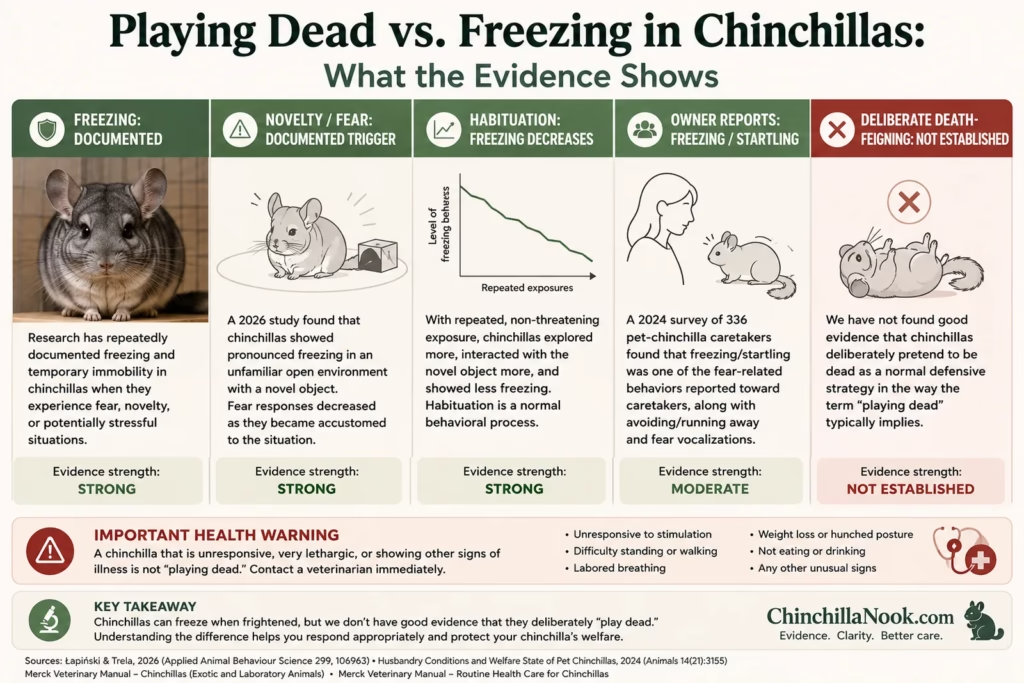
Research has documented freezing and immobility in chinchillas when they encounter fear, novelty, or potentially stressful situations. However, we haven’t found good scientific evidence showing that chinchillas deliberately pretend to be dead as a normal defensive strategy.
So if your chinchilla suddenly stops moving, “freezing” is a better scientific description than “playing dead.”
And there’s one more important point: a chinchilla that is genuinely unresponsive or showing signs of illness should never simply be assumed to be playing dead.
Quick Answer
Chinchillas can freeze and become temporarily immobile when frightened, but there is not good evidence that they deliberately “play dead” in the way the phrase usually implies.
A 2026 study of 20 subadult chinchillas found pronounced freezing when the animals were exposed to an unfamiliar open environment and a novel object. Those fear responses decreased during repeated exposures as the chinchillas became accustomed to the situation.
A separate 2024 survey of 336 pet-chinchilla caretakers also documented freezing/startling as one of the fear-related behaviors reported by owners.
So the behavior is real.
The “playing dead” interpretation is the part we should be cautious about.
What Does “Playing Dead” Actually Mean?
“Playing dead” usually means feigning death—an animal intentionally remaining motionless in a way that makes a predator think it is dead.
This behavior, sometimes called thanatosis, is documented in various animal species.
But that doesn’t mean every species that becomes motionless is deliberately pretending to be dead.
For chinchillas, the evidence we found supports a different explanation:
A frightened or uncertain chinchilla may freeze as part of its defensive response.
That distinction matters because freezing doesn’t necessarily mean the animal has made a conscious decision to “pretend” to be dead.
Do Chinchillas Actually Freeze?
Yes. This behavior has been experimentally documented.
A 2026 study published in Applied Animal Behaviour Science investigated emotional reactivity and habituation in 20 subadult chinchillas—10 females and 10 males.
The animals were repeatedly exposed to an open-field test containing a novel object.
During their initial exposures, the chinchillas showed:
- Freezing
- Strong preference for staying near the walls of the arena
- Reduced exploration of the unfamiliar central area
- Other signs consistent with fear or anxiety
With repeated exposure, those defensive responses decreased. The animals became more willing to explore the center of the arena and interact with the unfamiliar object.
What does that tell us?
It suggests that freezing can be part of a chinchilla’s response to novelty and perceived threat.
It also demonstrates something important:
The behavior can change as the animal becomes familiar with the situation.
That process is called habituation.
Read the 2026 chinchilla behavior study
Why Would a Chinchilla Freeze?
We shouldn’t assume that every episode of immobility has exactly the same cause.
But research gives us several useful contexts.
1. Fear or startle
A sudden event can cause a chinchilla to stop and become very still.
For a small prey animal, immediately moving toward something unfamiliar isn’t always the safest response.
2. An unfamiliar environment
The 2026 open-field study provides particularly strong evidence here.
The chinchillas initially showed pronounced defensive behavior in the unfamiliar environment. With repeated exposure, they became more exploratory.
3. Perceived threat
Freezing can occur alongside other fear-related responses.
A 2024 study surveying pet-chinchilla caretakers included freezing/startling, avoiding/running away, and fear-related vocalizations as indicators of fearful behavior toward caretakers.
What Did Pet Owners Report?
The 2024 study is useful because it looked specifically at pet chinchillas, rather than only laboratory or farmed animals.
Researchers surveyed 336 chinchilla caretakers about husbandry, health, behavior, and their relationships with their animals.
Among the reported reactions toward caretakers was freezing/startling.
The reported frequency varied considerably between animals:
| Reported frequency | Percentage |
|---|---|
| More than once a day | 2.9% |
| Once a day | 3.6% |
| More than once a week | 6.9% |
| Once a week | 2.9% |
| More than once a month | 11.4% |
| Once a month | 11.4% |
| Never | 60.8% |
These numbers are caretaker reports, not laboratory measurements of how often chinchillas freeze. They shouldn’t be interpreted as a universal frequency for all pet chinchillas.
What they do show is that freezing/startling is a behavior that pet owners report observing.
Read the 2024 pet-chinchilla welfare study
Freezing Isn’t the Same as Playing Dead
This is probably the most important distinction in the entire article.
Imagine your chinchilla hears a sudden loud noise.
It stops.
It becomes extremely still.
You approach carefully and it remains alert.
A short time later, it starts moving normally again.
That pattern can be consistent with freezing after a fright.
Calling it “playing dead” implies something much more specific: that the animal is deliberately pretending to be dead.
What does the evidence support?
Freezing: 🟢 Documented
Temporary immobility during fear/novelty: 🟢 Documented
Deliberate death-feigning by chinchillas: 🔴 Not established
That’s why we use freezing rather than playing dead as the scientific description.
How Can You Tell the Difference?
You can’t diagnose a chinchilla’s condition from one behavior alone, but there are some important practical distinctions.
🟢 Brief freezing after a fright
A chinchilla may:
- Suddenly become still
- Remain alert
- React to its surroundings
- Resume normal movement after the perceived threat passes
This can be consistent with a normal fear or startle response.
🟡 Repeated or prolonged freezing
If your chinchilla repeatedly freezes in particular situations, look for possible triggers.
For example:
- Sudden noises
- Unfamiliar people
- New environments
- Handling
- Other animals
- Changes around the enclosure
Repeated fear responses are worth paying attention to rather than simply dismissing them as your chinchilla “playing dead.”
The 2026 study is especially interesting here because the chinchillas’ fear responses decreased as they became accustomed to the unfamiliar environment.
🔴 When It May Be a Health Problem
This is where we should be especially careful.
Don’t assume that an immobile chinchilla is playing dead.
A chinchilla that is genuinely sick may become lethargic or unresponsive.
The Merck Veterinary Manual lists lethargy and unresponsiveness to stimulation among signs of disease in chinchillas. Other warning signs include abnormal gait, labored breathing, weight loss, hunched posture, and a lack of normal activity.
If your chinchilla is difficult to rouse or isn’t behaving normally, don’t wait for the behavior to resolve on the assumption that it is “playing dead.”
Contact a veterinarian promptly if you see signs of illness or genuine unresponsiveness.
Read Merck Veterinary Manual’s chinchilla health guidance
What Should You Do If Your Chinchilla Freezes?
The best response is usually to reduce the perceived threat rather than force interaction.
If your chinchilla freezes after a sudden noise or unfamiliar event:
- Give it space.
- Avoid grabbing or chasing it.
- Reduce unnecessary noise or activity.
- Allow it time to investigate the environment at its own pace.
- Watch whether it returns to normal behavior.
The 2026 research provides an interesting example of this process: repeated exposure to an unfamiliar environment was associated with reduced fear responses and increased exploration.
That doesn’t mean owners should deliberately expose a frightened chinchilla to stressful situations.
Rather, it shows that familiarity can change how chinchillas respond to novelty.
Can Handling Cause a Chinchilla to Freeze?
It can be stressful for some animals.
The 2024 pet-chinchilla survey found that freezing/startling was among the behaviors associated with fearful responses toward caretakers.
This is one reason calm, gentle handling matters.
Merck also recommends handling chinchillas calmly and gently to minimize stress.
A chinchilla that freezes during handling shouldn’t automatically be interpreted as enjoying the interaction simply because it isn’t running away.
Being motionless doesn’t necessarily mean being relaxed.
What About Predators?
This is where we need to avoid speculation.
You may see online explanations claiming that chinchillas evolved to “play dead” to fool predators.
We haven’t found good evidence establishing that death-feigning is a normal chinchilla anti-predator strategy.
The research we can actually point to demonstrates freezing in response to fear and novelty, not deliberate deception of predators.
So we shouldn’t turn a documented behavior into an evolutionary story without evidence.
What We Know — And What We Don’t
| Claim | Evidence |
|---|---|
| Chinchillas can freeze | 🟢 Strong |
| Freezing has been experimentally observed | 🟢 Strong |
| Novel environments can trigger freezing | 🟢 Strong |
| Freezing can decrease with habituation | 🟢 Strong |
| Pet owners report freezing/startling | 🟢 Moderate |
| Freezing can be associated with fearful behavior | 🟢 Strong |
| Chinchillas deliberately pretend to be dead | 🔴 Not established |
| Every motionless chinchilla is “playing dead” | 🔴 False |
| Prolonged unresponsiveness can be a sign of illness | 🟢 Strong veterinary guidance |
Frequently Asked Questions
Do chinchillas play dead?
There isn’t good evidence that chinchillas deliberately fake their own death as a normal defensive behavior. However, research has documented freezing and temporary immobility, particularly in response to fear or unfamiliar situations.
Why does my chinchilla suddenly freeze?
Freezing can be part of a fear or startle response. Research has documented freezing when chinchillas are exposed to unfamiliar environments or novel stimuli.
Is freezing normal for chinchillas?
A brief freezing response can occur when a chinchilla is frightened or confronted with something unfamiliar. However, repeated or prolonged freezing deserves attention, particularly if other unusual behaviors or signs of illness are present.
How long does a chinchilla freeze for?
There isn’t a scientifically established “normal” duration for freezing in pet chinchillas. Duration can depend on the situation and the individual animal. The 2026 study measured immobility as part of behavioral responses across repeated experimental exposures rather than establishing a normal duration for pet chinchillas.
Should I touch my chinchilla when it freezes?
It’s generally better to give a frightened chinchilla space rather than immediately grabbing or chasing it. Reduce the source of stress and allow the animal time to settle. If it remains unresponsive or shows signs of illness, contact a veterinarian.
How do I know if my chinchilla is sick rather than freezing?
A sick chinchilla may show lethargy, unresponsiveness, difficulty walking, labored breathing, weight loss, a hunched posture, or other abnormal signs. If your chinchilla is difficult to rouse or appears seriously unwell, don’t assume it is simply freezing. Contact a veterinarian.
Can stress make a chinchilla freeze?
Yes. Freezing is documented among fear-related behaviors in chinchillas. A 2024 survey of pet chinchilla caretakers included freezing/startling among reported fearful reactions toward caretakers.
The Bottom Line
Chinchillas can freeze when frightened, but we don’t have good evidence that they deliberately “play dead.”
Recent research gives us a much better explanation.
A 2026 study found that chinchillas initially showed freezing and other defensive behaviors when exposed to an unfamiliar environment, and those responses decreased as the animals became accustomed to the situation.
Research involving pet chinchillas also documents freezing/startling as a reported fear-related behavior.
So if your chinchilla suddenly becomes motionless after a fright, freezing is a more evidence-based explanation than assuming it is pretending to be dead.
But remember the other side of the equation:
A chinchilla that is genuinely unresponsive, lethargic, struggling to breathe, unable to move normally, or showing other signs of illness should not be dismissed as “playing dead.” Veterinary guidance treats unresponsiveness and lethargy as potential signs of disease.
At ChinchillaNook, that’s the distinction we want to make: what the behavior actually shows, what science can explain, and when an unusual behavior deserves more attention.
Research & Further Reading
🔬 Primary behavioral research
Łapiński, S. & Trela, M. (2026).
Emotional reactivity and habituation in farmed chinchillas (Chinchilla lanigera) exposed to an open field test.
Applied Animal Behaviour Science, 299, 106963.
🐭 Pet-chinchilla welfare research
Husbandry Conditions and Welfare State of Pet Chinchillas (Chinchilla lanigera) and Caretakers’ Perceptions of Stress and Emotional Closeness to Their Animals (2024).
The study surveyed 336 pet-chinchilla caretakers and included freezing/startling among reported fear-related behaviors.
Read the full study on PubMed Central
🩺 Veterinary guidance
Merck Veterinary Manual — Chinchillas
Read Merck’s chinchilla health guidance
Merck Veterinary Manual — Routine Health Care for Chinchillas
Read the routine health-care guidance