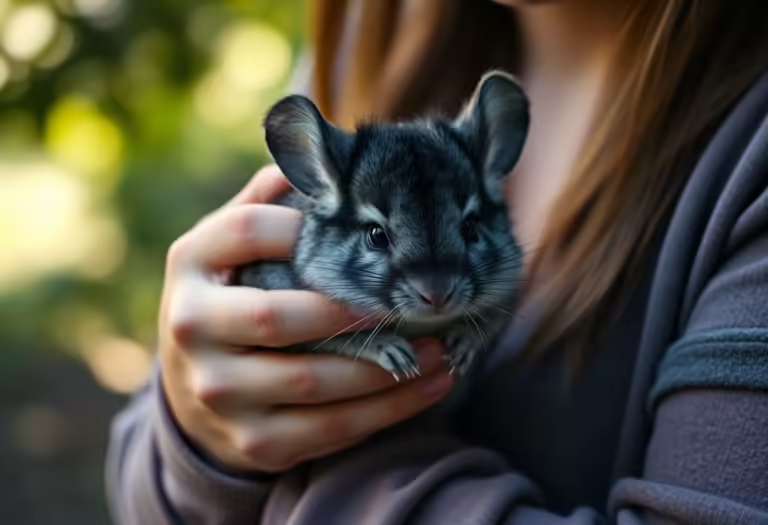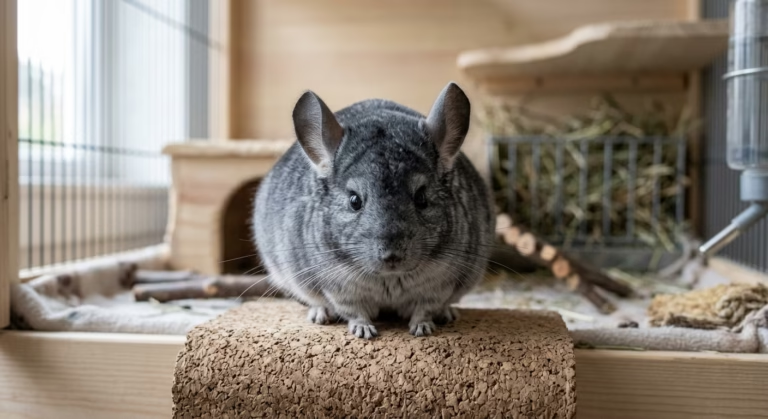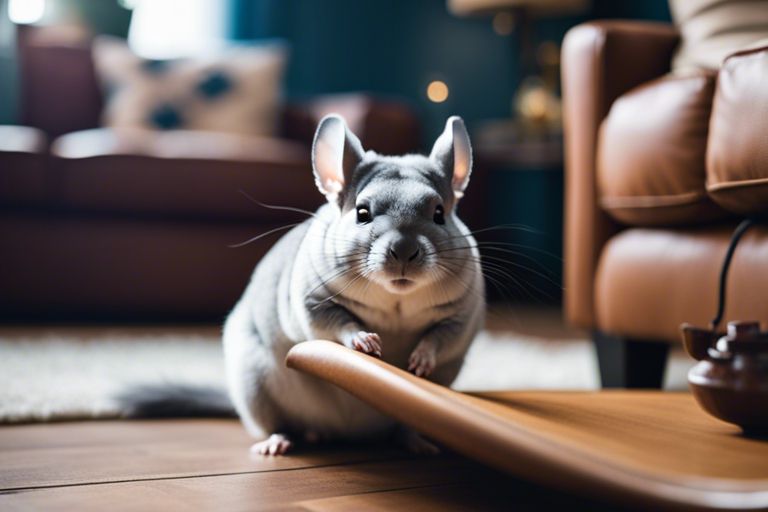
Chinchillas can learn some trained responses, but the evidence is more specific than simply calling them “highly intelligent.” Laboratory studies have shown chinchillas can learn auditory discriminations and respond to conditioning procedures, while other research has examined habituation and predictable handling. PubMed: auditory discrimination learning in chinchillas PubMed: chinchilla habituation research For a pet chinchilla, the practical goal is not to make it perform a long list of tricks. It is to build predictable communication and voluntary behaviors without creating stress. RSPCA guidance notes that chinchillas can become comfortable with familiar people, but many do not enjoy being picked up and can be easily startled. RSPCA chinchilla behaviour guidance
Key Takeaways:
- Start with voluntary behaviors: Targeting, approaching a cue and simple movement are more appropriate starting points than tricks that require restraint.
- Use positive reinforcement: Reward the behavior you want immediately with a small, appropriate food reward or another preferred reinforcer.
- Keep sessions brief and predictable: Stop while your chinchilla is still comfortable, and never force a behavior.
Preparing to Train Your Chinchilla
Creating a Safe Training Environment
Any successful training session with your chinchilla starts with creating a safe environment. Ensure the training area is free from any potential hazards such as wires, sharp objects, or small spaces where your pet could get stuck. Chinchillas are curious and agile animals, so it’s necessary to remove any obstacles that could pose a risk to their safety.
Essential Training Supplies
You do not need a large collection of training equipment. A safe, quiet area, a small appropriate food reward, and a consistent cue are enough to start. A target can be useful, but it should never be used to chase, corner or physically force the chinchilla. Because chinchillas can react to unpredictable handling, predictable cues are especially useful. One study found that behavioral reactions to handling attempts were affected by whether the event was reliably signaled, supporting the value of consistency and predictability. Read the PubMed study on predictable handling cues.
A clicker is optional rather than essential. If you use one, first pair the sound with a reward at a low volume and watch your chinchilla’s response. If the sound makes your pet startle, hide, freeze or become agitated, stop using it and choose a quieter verbal cue instead. The important part is that the cue is consistent and immediately followed by a reward when the desired behavior occurs.
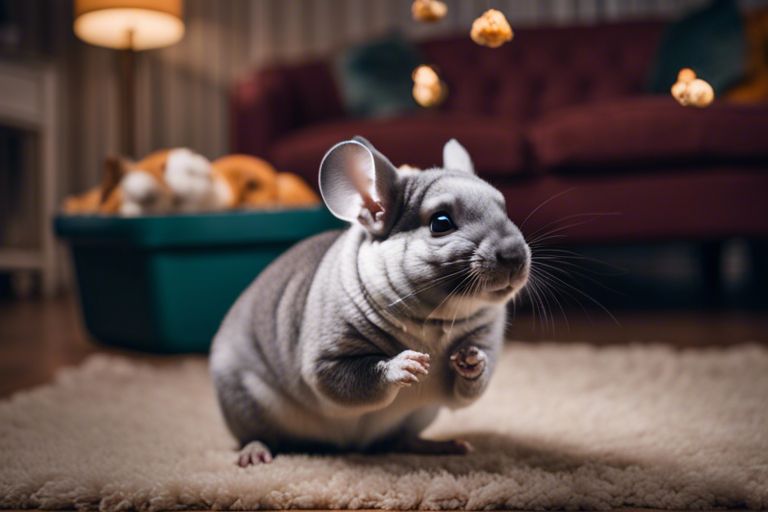
Training Basics
Building Trust with Your Chinchilla
There’s no doubt that trust is the foundation of any successful training relationship with your chinchilla. Before plunging into trick training, spend time getting to know your chinchilla and allowing it to become comfortable with your presence. Offer treats, speak softly, and avoid sudden movements to build a strong bond based on trust and respect.
Using Positive Reinforcement
Positive reinforcement means rewarding a behavior you want to see repeated. For chinchillas, keep food rewards small and appropriate for their normal diet rather than relying on raisins or other sugary dried fruit. RSPCA guidance supports interacting with chinchillas through petting or a small food treat, while veterinary diet guidance should remain the basis for deciding which foods are appropriate. Reward immediately after the behavior so the animal can more easily connect the action with the consequence.
Consistency and patience matter, but the animal’s response matters more than completing a planned exercise. If a session produces repeated fear, escape attempts or other stress signals, stop and try a simpler behavior another time.
Teaching Simple, Voluntary Behaviors
Targeting
Teach your chinchilla to approach and touch a target with its nose. Present the target nearby, wait for voluntary investigation, mark the behavior with a consistent cue, and reward immediately. Gradually ask for the target touch from different positions.
Following a Cue
Once your chinchilla understands targeting, you can use the target to guide simple movement, such as walking a short distance toward you or moving from one safe spot to another. Keep the movement voluntary and close to the ground.
Coming to a Familiar Cue
You can build an association between a consistent sound or word and approaching you. Say the cue when your chinchilla is already moving toward you, then reward the approach. Over repeated sessions, the cue can become a predictable signal that approaching you is worthwhile.
Simple Stationing
A chinchilla can be encouraged to pause on a safe platform or other familiar location for a moment. Reward calm, voluntary pauses rather than physically placing the animal there. This can be more useful in everyday handling than tricks that require jumping, rolling or restraint.
When to Stop Training
Keep the Session Short and Voluntary
There is not a well-established chinchilla-specific scientific rule saying that every session should last exactly 10 or 15 minutes. Instead, use your chinchilla’s behavior as the stopping point. Start with a few successful repetitions and end while the animal is still comfortable and engaged. Several short sessions can be more practical than one long session. If your chinchilla begins hiding, repeatedly trying to escape, freezing, barking, whistling, refusing normal interaction or showing other stress signals, end the session and give it space. RSPCA guidance recommends seeking veterinary or clinical behaviour advice when stress or behavior changes become ongoing.
Dealing with Challenges and Setbacks
Training a chinchilla can come with its fair share of challenges and setbacks, but with patience and perseverance, you can overcome them. It’s crucial to remember that each chinchilla is unique, and what works for one may not work for another. If your chinchilla is showing signs of stress or resistance during training, it’s important to take a step back and evaluate the situation. Seek advice from a vet or a professional animal trainer if needed, to ensure you are approaching training in the best way for your chinchilla’s well-being.
Summing up
To wrap up, teaching your chinchilla tricks can be a fun and fulfilling experience for both you and your pet. By starting with basic commands, using positive reinforcement, and being patient and consistent in your training, you can help your chinchilla learn new tricks and showcase their intelligence and agility. Remember to always prioritize your chinchilla’s well-being and comfort during training sessions, and enjoy the bonding experience that comes with teaching your furry friend new skills.
Research & Further Reading
- Boettcher & Miller — learning sets and auditory discrimination in chinchillas
- Leibrecht & Kemmerer — habituation in chinchillas
- Chinchilla behavioral responses to predictable handling signals
- RSPCA — chinchilla behaviour and welfare
- RSPCA — creating a good home for chinchillas
FAQ
Q: What tricks can I teach my chinchilla?
A: Practical goals include targeting, approaching a familiar cue, simple voluntary movement and brief stationing. There is limited research on pet chinchilla trick training, so not every chinchilla will learn the same behaviors.
Q: How do I start teaching my chinchilla tricks?
A: Start by creating a positive environment with treats as rewards. Begin with simple commands like “come” or “spin,” and gradually introduce more complex tricks as your chinchilla learns.
Q: Are there any safety considerations when teaching my chinchilla tricks?
A: Avoid forced handling, rolling onto the back, increasing jump heights or any exercise that creates a fall risk. Chinchillas should be able to move away from the training interaction, and training should stop when they show fear or stress.