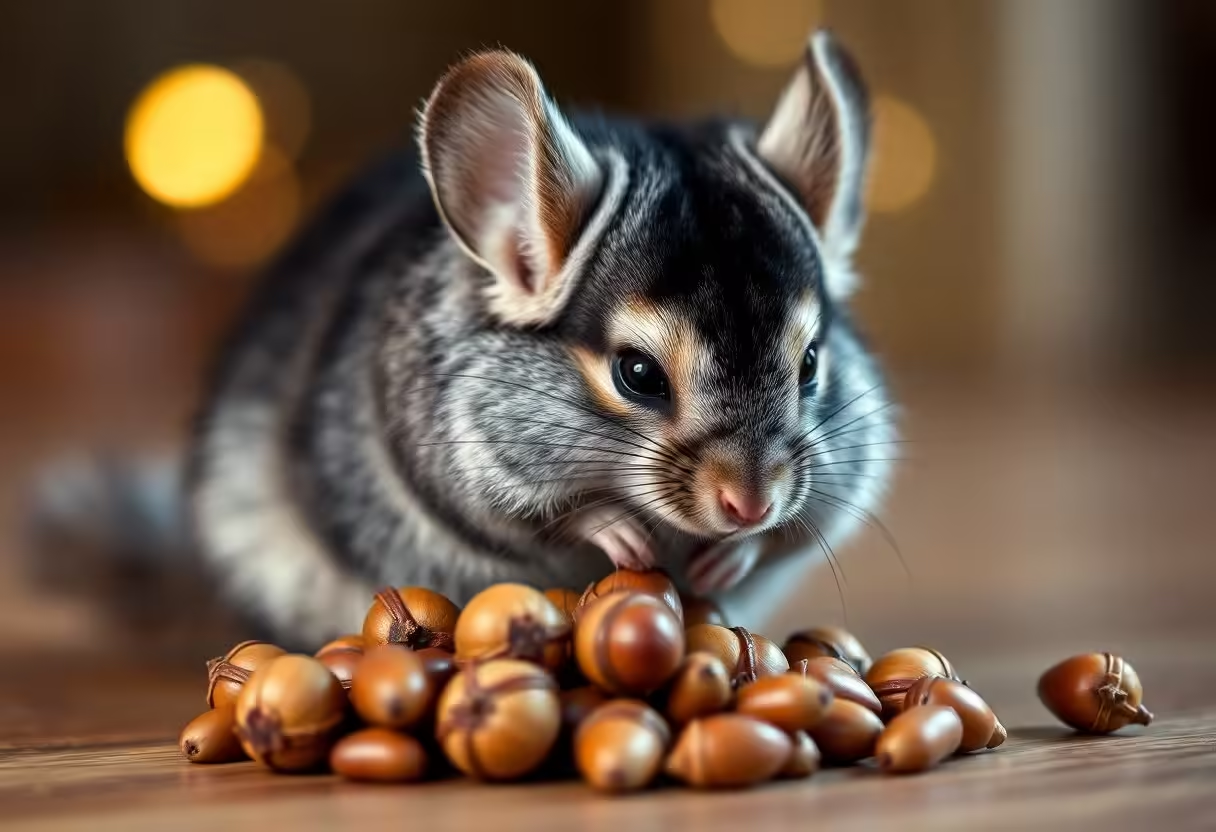
Acorns may look like a natural food for chinchillas, but they are not a good treat to offer. Veterinary guidance for chinchillas recommends avoiding nuts and seeds, while veterinary toxicology references identify acorns and oak foliage as potentially toxic in animals. Because there is no established safe acorn serving for pet chinchillas, the practical choice is to avoid feeding them.
Key Takeaways
- Do not intentionally feed acorns to chinchillas.
- Merck Veterinary Manual advises avoiding nuts and seeds in a chinchilla’s diet.
- Acorns contain tannins, and oak poisoning is documented in animals; however, the available veterinary guidance does not establish a chinchilla-specific toxic dose.
- A chinchilla’s diet should be built around grass hay, appropriate chinchilla pellets, fresh water, and suitable foods offered in appropriate amounts.
- If a chinchilla has eaten an unknown or potentially harmful amount of acorn, contact an exotic-animal veterinarian for advice rather than trying to treat the problem at home.
Why Acorns Should Be Avoided
Veterinary guidance already says to avoid nuts and seeds
Merck Veterinary Manual’s chinchilla diet guidance recommends avoiding dried fruits, grains, seeds, and nuts because these foods can upset a chinchilla’s stomach. Acorns are the seed of oak trees, so they do not fit well with the recommended chinchilla diet. Merck Veterinary Manual: Diet for a Chinchilla
Acorns contain tannins
Oak leaves and acorns contain tannins and other compounds associated with oak toxicosis. Merck notes that all oak species should be considered potentially toxic and that the risk of intoxication generally increases as the amount of oak material consumed increases. This evidence is based on animal toxicology and does not establish a specific toxic dose for chinchillas, so it is better not to assume that a particular amount is safe. Merck Veterinary Manual: Oak Toxicosis in Animals
They are not an appropriate chinchilla treat
Chinchillas have a high requirement for dietary fiber, and their diet should consist mainly of high-quality grass hay, with chinchilla pellets used as a supplement. Treats should not replace the foods that provide the fiber and nutrition they need. Merck Veterinary Manual: Chinchillas
What Should Chinchillas Eat Instead?
A simple chinchilla diet is much more appropriate than experimenting with wild foods such as acorns.
- Grass hay: High-quality grass hay, such as timothy hay, should be available every day and is important for fiber and dental wear.
- Chinchilla pellets: Use a nutritionally appropriate commercial chinchilla pellet as directed.
- Fresh water: Provide clean water every day.
- Suitable fresh foods: Merck allows small amounts of certain fresh vegetables and occasional fruit, but new foods should be introduced gradually.
Merck also recommends removing uneaten food daily and introducing new foods slowly because chinchillas have sensitive digestive systems. Merck Veterinary Manual
What If My Chinchilla Ate an Acorn?
If your chinchilla has eaten an acorn, do not assume that serious poisoning will occur, but do not assume that it is safe either. The risk depends on factors such as the amount eaten and the individual animal, and veterinary references do not provide a chinchilla-specific safe dose.
Remove access to the acorns and contact an exotic-animal veterinarian for advice, especially if your chinchilla ate more than a tiny amount or you are unsure how much was consumed. Watch closely for changes such as reduced appetite, unusual lethargy, diarrhea, reduced fecal output, or other signs of illness. Merck advises contacting a veterinarian promptly when a chinchilla shows signs of illness or digestive problems. Merck Veterinary Manual: Routine Health Care for Chinchillas
Can Chinchillas Eat Acorns? Final Answer
No, acorns should not be offered as food to chinchillas. The clearest reason is that veterinary chinchilla diet guidance recommends avoiding nuts and seeds, while acorns also contain tannins associated with oak toxicosis in animals. There is not enough chinchilla-specific evidence to claim a precise toxic dose, so the safest evidence-based approach is simply to avoid feeding them.
For everyday nutrition, stick with a high-fiber diet centered on good-quality grass hay, appropriate chinchilla pellets, fresh water, and carefully selected foods that are known to be suitable for chinchillas.
FAQ
Can chinchillas eat acorns?
No. Acorns should not be intentionally fed to chinchillas. Veterinary chinchilla diet guidance recommends avoiding nuts and seeds, and acorns contain tannins associated with oak toxicosis in animals.
Are acorns poisonous to chinchillas?
There is not a well-established chinchilla-specific toxic dose for acorns. However, oak acorns are recognized as potentially toxic in animals, and veterinary guidance recommends avoiding nuts and seeds in chinchilla diets. For that reason, acorns should be avoided.
What should I do if my chinchilla ate an acorn?
Remove access to the acorns and contact an exotic-animal veterinarian for advice, particularly if the amount eaten is unknown or more than a small amount. Monitor your chinchilla for changes in appetite, energy, droppings, or other signs of illness.
What are safer foods for chinchillas?
High-quality grass hay should form the foundation of the diet, with appropriate chinchilla pellets, fresh water, and suitable fresh foods in appropriate amounts.