Home Chinchilla Diet & Nutrition

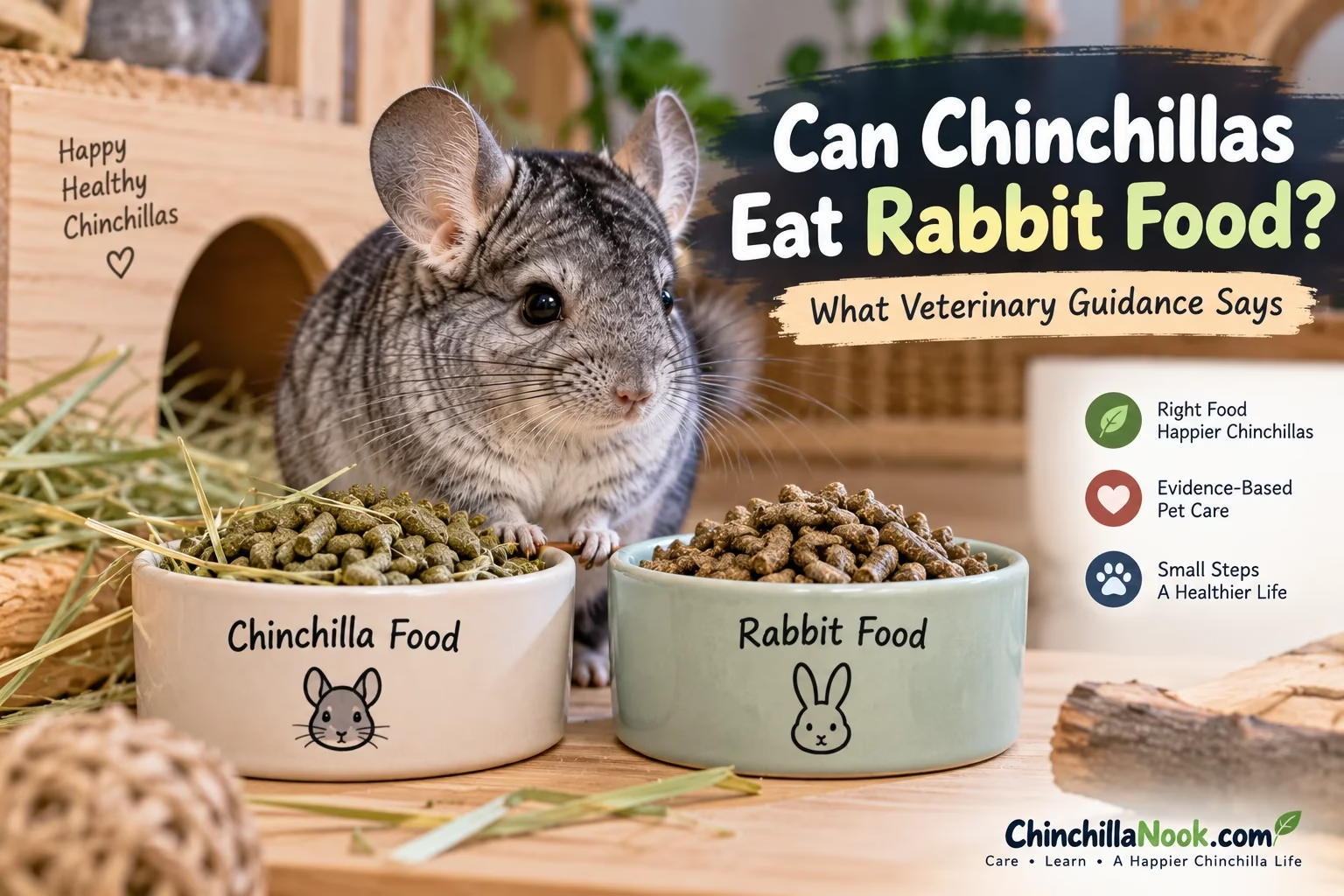
Can Chinchillas Eat Rabbit Food? What Veterinary Guidance Says

If you have both a rabbit and a chinchilla, you may wonder whether they can share the same food. The answer is more complicated than a simple yes or no. Some veterinary guidance says rabbit pellets have been…

Can Chinchillas Eat Rabbit Food? What Veterinary Guidance Says

If you have both a rabbit and a chinchilla, you may wonder whether they can share the same food.

The answer is more complicated than a simple yes or no.

Some veterinary guidance says rabbit pellets have been used successfully with chinchillas. However, chinchilla-specific pellets are generally preferred, and not every product sold as “rabbit food” is appropriate for a chinchilla.

The biggest problem is that rabbit food is not one specific food. It can mean plain rabbit pellets, muesli-style mixes, treats, dried vegetables, or other commercial products.

For a chinchilla, the ingredients and nutritional profile matter much more than the word “rabbit” on the package.

Quick Answer

Can chinchillas eat rabbit food?

Some rabbit pellets can be used for chinchillas, but chinchilla-specific pellets are the better default choice.

Merck Veterinary Manual states that guinea pig or rabbit pelleted diets have been used successfully with chinchillas, while also recommending that pellets made specifically for chinchillas be prioritized.

This does not mean that every rabbit food product is suitable.

A rabbit muesli mix containing grains, seeds, dried fruit, or other ingredients is very different from a plain, high-quality rabbit pellet.

For everyday feeding, choose a diet specifically formulated for chinchillas whenever possible.

Why Is “Rabbit Food” Such a Complicated Term?

When someone says “rabbit food,” they might mean several different things.

It could refer to:

  • Plain rabbit pellets
  • Rabbit muesli mixes
  • Pellets containing seeds or grains
  • Dried vegetable mixes
  • Rabbit treats
  • Hay
  • Fresh vegetables
  • Commercial forage products

These foods are not nutritionally identical.

Therefore, asking “Can chinchillas eat rabbit food?” without specifying the product can produce a misleading answer.

The more useful question is:

Can a particular rabbit pellet or rabbit diet be appropriate for a chinchilla?

That depends on the ingredients, formulation, and the individual animal.

Can Chinchillas Eat Rabbit Pellets?

Sometimes, yes

This is the important distinction.

Merck Veterinary Manual specifically notes that rabbit pelleted diets have been used successfully with chinchillas. However, it says that pellets made specifically for chinchillas should be prioritized.

So the evidence does not support saying that rabbit pellets are automatically dangerous.

Instead:

A suitable rabbit pellet may be usable in some situations, but a chinchilla-formulated pellet is the preferred option.

If you are considering switching your chinchilla to a rabbit pellet because chinchilla food is unavailable, check the product ingredients and discuss the choice with an exotic-animal veterinarian.

Why Are Chinchilla Pellets Preferred?

Chinchillas have specific dietary requirements.

Their natural diet is high in fiber, and captive chinchillas need a diet based heavily on grass hay.

Merck Veterinary Manual states that chinchillas have a high requirement for dietary fiber and that their diet should consist mainly of high-quality grass hay. Pelleted chinchilla food can then supplement the diet.

The RSPCA similarly recommends that good-quality hay make up the majority of a chinchilla’s diet, alongside a small measured amount of grass-based chinchilla pellets.

This is why a species-specific chinchilla pellet is the simplest choice when one is available.

Is Rabbit Food Bad for Chinchillas?

Not necessarily.

This is where many online articles oversimplify the issue.

It would be inaccurate to say that all rabbit food is bad for chinchillas because veterinary guidance explicitly acknowledges that rabbit pellets have been used successfully with them.

At the same time, it would also be inaccurate to say that any rabbit food product can safely replace a chinchilla diet.

The product matters.

A plain, appropriate rabbit pellet is very different from a colorful food mix containing seeds, grains, dried fruit, or sugary ingredients.

What About Rabbit Muesli?

Rabbit muesli is a different issue

Muesli-style rabbit foods commonly contain a mixture of different ingredients rather than a uniform pellet.

The RSPCA does not recommend muesli-style diets for rabbits because they can contribute to selective feeding and nutritional problems.

That makes muesli-style rabbit food a poor choice to use as a substitute for a chinchilla pellet.

Chinchillas should not be encouraged to selectively pick out preferred ingredients while leaving other components behind.

For a chinchilla, a simple, appropriately formulated pellet is generally preferable to a mixed food containing many different visible ingredients.

Can Chinchillas Eat Rabbit Hay?

Yes, hay itself is a different question

Good-quality grass hay is an important part of a chinchilla’s diet.

The RSPCA recommends constant access to good-quality hay for chinchillas, while Merck recommends unlimited timothy hay.

So if by “rabbit food” you mean plain grass hay, that can be appropriate for a chinchilla.

In fact, hay should be one of the most important foods in the diet.

The label on the hay matters less than its quality and type. Suitable grass hays can include timothy and other appropriate grass hays.

What Ingredients Should You Be Careful About?

When looking at a rabbit pellet for a chinchilla, don’t rely only on the animal pictured on the package.

Look at the ingredient list.

Be cautious about products containing large amounts of:

  • Seeds
  • Nuts
  • Dried fruit
  • Sugary ingredients
  • Added treats
  • Colorful mixed pieces
  • Ingredients designed primarily to encourage selective feeding

Merck advises avoiding dried fruits, grains, seeds, and nuts in chinchillas because they can upset the stomach.

The RSPCA also advises avoiding nuts and seeds because they are high in fat.

Can a Chinchilla Eat Rabbit Pellets Every Day?

This is where veterinary advice should be individualized.

Merck says rabbit pelleted diets have been used successfully with chinchillas but still recommends prioritizing pellets specifically made for chinchillas.

Therefore, rabbit pellets should not automatically become the permanent replacement for chinchilla pellets simply because a chinchilla tolerates them.

If a rabbit pellet is being considered as a regular food, check the exact formulation and speak with an exotic-animal veterinarian.

The individual chinchilla’s age, health, dental condition, weight, and existing diet can all matter.

What Should a Chinchilla’s Main Diet Look Like?

1. High-quality grass hay

Hay should form the foundation of the diet.

It provides fiber and requires the chewing action that helps wear down continuously growing teeth.

Merck describes long-strand grass hay, such as timothy hay, as very important for chinchillas.

2. Appropriate pellets

A measured amount of an appropriate chinchilla pellet can supplement the hay.

Merck recommends a small amount of pellets each day, while the RSPCA recommends around 1–2 tablespoons of grass-based chinchilla pellets per chinchilla daily.

The exact feeding amount should take the individual animal and the manufacturer’s instructions into account.

3. Fresh water

Clean drinking water should always be available.

Merck recommends fresh water and notes that water bottles can help keep the water cleaner.

4. Carefully selected additional foods

Some veterinary guidance allows small amounts of appropriate fresh foods.

However, these should complement rather than replace the high-fiber foundation of hay and appropriate pellets.

Can Chinchillas Eat Rabbit Treats?

Rabbit treats should not automatically be given to chinchillas.

A treat designed for a rabbit is still formulated and marketed for a different species.

Some rabbit treats contain ingredients that are not appropriate for chinchillas, including high-sugar or high-fat ingredients.

This is another reason why “rabbit food” is too broad a category to answer with a simple yes or no.

Always check the ingredients.

What If My Chinchilla Accidentally Eats Rabbit Food?

If your chinchilla eats a small amount of an unfamiliar rabbit pellet, don’t automatically panic.

Remove the unfamiliar food and return to the normal diet.

Make sure your chinchilla has access to its usual hay and fresh water, and monitor:

  • Appetite
  • Water intake
  • Droppings
  • Activity
  • Behavior

The digestive system of a chinchilla can be sensitive to sudden dietary changes.

Merck recommends introducing new foods slowly over several days because rapid dietary changes can cause digestive problems such as wet or sticky droppings and gas.

If your chinchilla stops eating, produces significantly fewer droppings, develops diarrhea, becomes lethargic, or shows other signs of illness, contact an exotic-animal veterinarian.

Should You Switch From Chinchilla Pellets to Rabbit Pellets?

Don’t switch simply because rabbit pellets are cheaper or easier to find.

If your chinchilla is already eating an appropriate chinchilla pellet and doing well, there is generally no reason to replace it with rabbit pellets without a specific reason.

Merck’s guidance is useful here: rabbit pellets have been used successfully, but chinchilla-specific pellets should be prioritized.

If you need to change foods because of availability, cost, a medical issue, or another reason, make the change gradually and consider veterinary guidance.

What About Guinea Pig Food?

This is another area where species labels can cause confusion.

Merck also notes that guinea pig pelleted diets have been used successfully with chinchillas, while still recommending chinchilla-specific pellets as the priority.

That does not mean every guinea pig product is automatically appropriate.

The same principle applies:

Look at the actual formulation rather than relying only on the species name on the package.

Rabbit Food vs. Chinchilla Food

FeatureRabbit pelletsChinchilla pellets
Can they ever be used for chinchillas?Some have been used successfullyYes
Preferred when available?Not usuallyYes
Main dietary foundation?NoNo — hay should be the foundation
Hay required?Yes for rabbitsYes for chinchillas
Is every commercial product suitable?NoNo
Should ingredients be checked?YesYes
Should food changes be sudden?NoNo

The important point is that pellets are only one part of the diet.

Hay remains central to chinchilla feeding.

Why Hay Matters More Than the Pellet Brand

It is easy to spend too much time comparing pellet brands while overlooking the most important part of the diet.

Chinchillas need fiber and chewing opportunities.

The RSPCA recommends that hay make up the majority of their diet, and Merck emphasizes the importance of long-strand grass hay for both digestion and dental wear.

A good pellet cannot compensate for a diet that lacks sufficient hay.

When Should You Contact a Veterinarian?

Dietary problems can become serious in chinchillas.

Contact a veterinarian promptly if your chinchilla:

  • Stops eating
  • Produces fewer or no droppings
  • Develops persistent diarrhea
  • Becomes unusually lethargic
  • Shows abdominal discomfort
  • Has difficulty breathing
  • Develops excessive salivation
  • Becomes weak or unusually unresponsive

The RSPCA specifically advises contacting a veterinarian immediately if a chinchilla’s eating or drinking habits change or its droppings become reduced or stop.

Frequently Asked Questions

Can chinchillas eat rabbit food?

Some rabbit pellets have been used successfully with chinchillas, but chinchilla-specific pellets should be prioritized. Not every rabbit food product is appropriate.

Can chinchillas eat rabbit pellets?

Yes, some rabbit pellets can be used with chinchillas. Merck Veterinary Manual specifically notes that rabbit pelleted diets have been used successfully, while recommending chinchilla-specific pellets when available.

Can chinchillas eat rabbit muesli?

Rabbit muesli is not a good substitute for a chinchilla pellet. Mixed foods can contain ingredients such as grains, seeds, and dried foods that are not appropriate for a chinchilla’s normal diet.

Can chinchillas eat rabbit hay?

Yes. Good-quality grass hay is appropriate for chinchillas and should form a major part of their diet.

Is rabbit food toxic to chinchillas?

No blanket statement like that is supported. Some rabbit pellets have been used successfully with chinchillas. The exact product and ingredients matter.

Can I feed my chinchilla rabbit pellets if I run out of chinchilla pellets?

Some rabbit pellets may be suitable, but don’t assume every product is interchangeable. Check the ingredients and, if the substitution will continue, ask an exotic-animal veterinarian.

Can chinchillas eat rabbit treats?

Do not assume rabbit treats are suitable. Check the ingredients and choose treats according to chinchilla-specific dietary guidance.

Are chinchilla pellets better than rabbit pellets?

When both are appropriate products, veterinary guidance generally favors pellets specifically formulated for chinchillas. Merck specifically recommends prioritizing chinchilla pellets.

What should chinchillas eat every day?

A chinchilla’s diet should be based primarily on high-quality grass hay, with an appropriate measured amount of pellets and constant access to fresh water.

The Evidence at a Glance

QuestionEvidence-based answer
Can chinchillas eat rabbit food?Some rabbit pellets can be used, but the term “rabbit food” is too broad
Can they eat rabbit pellets?Some have been used successfully
Are chinchilla pellets preferred?Yes
Can they eat rabbit muesli?Not recommended as a substitute
Can they eat rabbit hay?Good-quality grass hay is appropriate
Should every rabbit product be considered safe?No
What should form most of the diet?High-quality grass hay
Should new foods be introduced quickly?No, changes should be gradual

Research & Further Reading

Bottom Line

Can chinchillas eat rabbit food? Sometimes — but it depends on what you mean by “rabbit food.”

Veterinary guidance indicates that some rabbit pellets have been used successfully with chinchillas. However, Merck recommends prioritizing pellets specifically made for chinchillas.

The safest general approach is therefore simple:

Feed high-quality grass hay as the foundation, use an appropriate chinchilla pellet, provide fresh water, and don’t assume that every rabbit food or rabbit treat is suitable for a chinchilla.

If you’re considering a rabbit pellet because chinchilla food is unavailable, examine the exact product rather than relying on the label alone—and speak with an exotic-animal veterinarian if it will become a regular part of the diet.

Have a question about chinchilla care? Explore more guides below.

Find Another Guide

What do you want to learn next?