Hearing your chinchilla make a strange sound after dark can be confusing. Some owners describe the sound as meowing, crying, squeaking, barking, chirping, or screaming.
The important thing is that “crying” or “meowing” is an owner description, not one specific scientific chinchilla call. Chinchillas have several vocalizations, and the meaning depends on the sound, the situation, and what the animal is doing at the same time.
Nighttime vocalization is not automatically a sign that something is wrong. Chinchillas are active during the evening and night, so owners naturally notice more movement and communication after dark.
What matters most is whether the sound is normal for your individual chinchilla or represents a sudden change accompanied by fear, injury, illness, or other unusual behavior.
Quick Answer: Why Do Chinchillas Meow at Night?
A chinchilla may make a sound that resembles a meow or cry at night because it is communicating, responding to another chinchilla, reacting to an unfamiliar sound, becoming alarmed, or showing another form of social or defensive behavior.
Veterinary references describe a broad range of chinchilla vocalizations rather than one universal “cry.” Merck Veterinary Manual notes that chinchillas have around ten vocal sounds that vary with behavioral context, including social contact, exploration, predator avoidance, breeding, and defensive or offensive behavior.
A sudden or unusually intense sound deserves more attention, especially when it occurs with reduced appetite, fewer droppings, unusual hiding, reluctance to move, injury, breathing difficulty, or another noticeable change.
Are Chinchillas Noisy at Night?
Yes. Nighttime is a normal active period for chinchillas.
Merck Veterinary Manual describes chinchillas as nocturnal, while welfare guidance such as the RSPCA emphasizes activity around the evening and early morning. The terminology varies somewhat between sources, but the practical point for owners is the same: you should expect your chinchilla to be active after dark.
When the rest of the house becomes quiet, normal sounds can also seem much louder. Running, jumping, chewing, cage movement, squeaking, and occasional barking may all become easier to notice at night.
So a chinchilla making noise at 1 a.m. is not, by itself, evidence of a health problem.
What Does “Crying” or “Meowing” Sound Like in a Chinchilla?
Owners use words such as “crying” and “meowing” for several different sounds. You might hear:
- Soft squeaks
- Chirps or gentle contact calls
- Barks
- Whistles or other high-pitched sounds
- Teeth chattering
- Loud squeals or screams
These descriptions are useful, but they should not be treated as formal scientific categories. Research has shown that chinchilla vocalizations vary acoustically and between individuals. One peer-reviewed study specifically examined bark calls produced by domestic chinchillas during a distress context and found individual differences in their acoustic characteristics.
That is why it is safer to interpret a sound using three things together:
- The sound: soft squeak, bark, scream, teeth sound, etc.
- The body language: relaxed, alert, defensive, hiding, struggling, or unusually still.
- The situation: another chinchilla nearby, a sudden noise, a new object, handling, injury, or no obvious trigger.
If you want to compare different vocalizations in more detail, see our guide to what sounds chinchillas make.
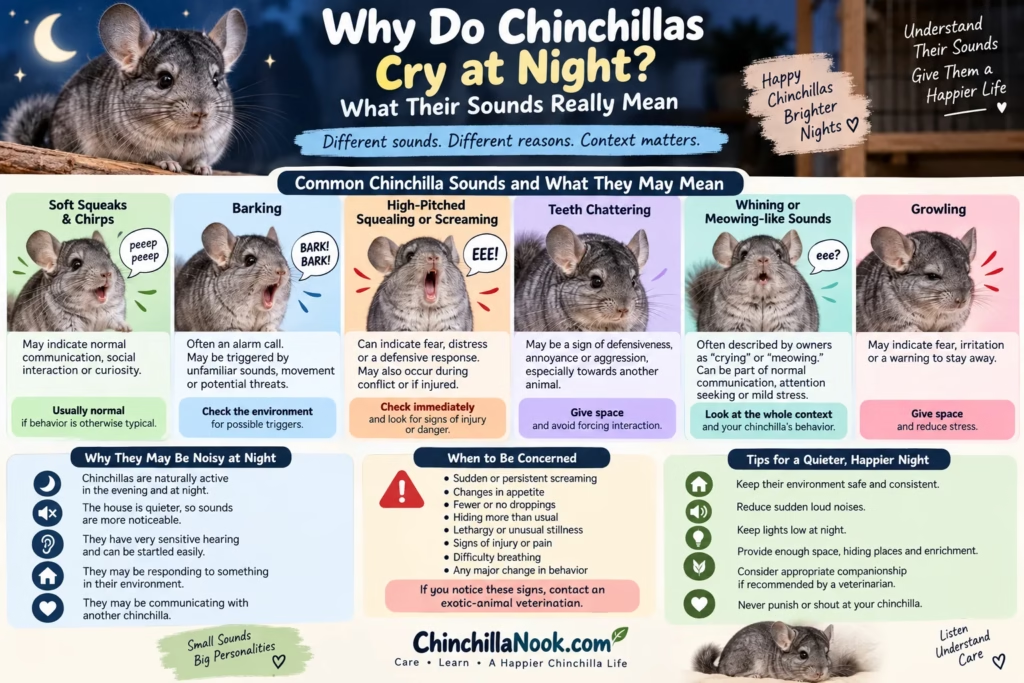
Common Chinchilla Sounds at Night
Soft squeaks and chirps
Soft squeaking or chirping can be part of normal communication. Chinchillas use vocalizations during social interactions, and the RSPCA describes several vocal sounds used in chinchilla communication.
If your chinchilla is eating normally, moving normally, grooming, and behaving as usual, an occasional soft vocalization is not necessarily concerning.
Barking
A chinchilla bark can be surprisingly loud. Barking may function as an alarm or defensive vocalization when the animal detects something it considers threatening or unfamiliar.
Possible triggers include a sudden noise, another animal, movement near a window, an unfamiliar smell, or a change in the surrounding environment. You may not always be able to identify the trigger.
Loud squealing or screaming
A sudden, intense scream is different from an occasional quiet squeak. Distress-related vocalizations have been documented in chinchillas, and welfare literature describes vocal behavior associated with defensive or agonistic situations.
If your chinchilla suddenly screams, check the animal and cage rather than assuming it is simply making normal nighttime noise. Look for a trapped limb, injury, conflict with another chinchilla, a fallen accessory, or another obvious source of distress.
If the screaming continues or you cannot identify a cause, contact an exotic-animal veterinarian.
Teeth chattering
Teeth chattering can occur in defensive or aggressive situations. Context matters, so give your chinchilla space if it is tense, facing another animal, or showing other defensive behavior.
Why Does My Chinchilla Make Sounds Only at Night?
1. Your chinchilla is more active
The simplest explanation may be normal activity. If your chinchilla rests for much of the daytime, its movement and vocalizations become more noticeable once evening arrives.
2. The house is quieter
Televisions, conversations, traffic, and household activity can mask quiet sounds during the day. At night, the same squeak or chirp can suddenly seem very loud.
3. Your chinchilla has detected something
Chinchillas have sensitive hearing and can be startled by loud or unfamiliar noises. A refrigerator, fan, plumbing noise, vehicle, neighboring pet, bird, door, or movement near a window may be noticeable to your chinchilla even when you barely notice it.
4. Your chinchilla is communicating
Not every vocalization is an alarm. Chinchillas also use sounds as part of social communication. If you keep more than one chinchilla, one animal may vocalize and another may respond.
Does a Chinchilla Cry Because It Is Sad?
You should not assign one human emotion to a sound without considering the context.
A vocalization can communicate information about the animal’s immediate situation, including social contact, alarm, defense, or distress. The sound alone cannot tell you that a chinchilla is sad, lonely, frightened, or in pain.
Instead, look for changes in normal behavior:
- Eating less or refusing food
- Fewer or noticeably changed droppings
- More hiding than usual
- Reluctance to move
- Unusual aggression
- Changes in grooming
- Abnormal posture or movement
- A noticeable change in interaction with people or other chinchillas
A change from your chinchilla’s normal behavior is often more informative than the vocalization by itself.
Can Chinchillas Cry Because They Are in Pain?
Distress-related vocalization can occur, but a sound alone cannot diagnose pain.
Chinchillas can hide signs of illness, which makes changes in appetite, activity, droppings, posture, and behavior important to notice. The RSPCA advises owners to pay attention to behavioral changes and signs that a chinchilla may be unwell or in pain.
If you are worried that vocalization may be related to pain, our guide on how chinchillas may show pain covers the other signs to watch for.
Seek veterinary advice promptly if unusual vocalization occurs together with difficulty breathing, weakness, obvious injury, severe lethargy, repeated unexplained screaming, or a significant change in eating or toileting.
What Should I Do If My Chinchilla Cries at Night?
1. Check the environment
Look for new or unusual things in the room: another pet, a sudden noise, a strong smell, bright light, movement near a window, or cage equipment that has shifted.
2. Observe your chinchilla
Check whether it is standing, moving, eating, drinking, grooming, and producing normal droppings. Compare what you see with your chinchilla’s usual behavior.
3. Approach calmly
Do not shout, bang on the cage, chase the animal, or force it out of a hiding place. Chinchillas can become frightened by sudden noises, and the RSPCA recommends quiet, gentle handling rather than punishment.
4. Look for a pattern
If the same sound occurs repeatedly, record the approximate time, duration, type of sound, what your chinchilla was doing, and what happened immediately beforehand. A short audio or video recording can also help a veterinarian understand what you are hearing.
When Should You Call a Vet?
An occasional squeak or bark in an otherwise normal chinchilla does not necessarily require a veterinary visit. The situation changes when the vocalization is new, persistent, unusually intense, or accompanied by other concerning signs.
Contact an exotic-animal veterinarian if your chinchilla:
- Suddenly begins making unusual or persistent distress sounds
- Stops eating or eats substantially less than normal
- Produces significantly fewer droppings
- Becomes unusually quiet, weak, or lethargic
- Hides much more than usual
- Shows obvious pain or abnormal posture
- Has difficulty breathing
- Has been injured
- Shows repeated unexplained screaming
If there is an obvious emergency such as severe breathing difficulty, major injury, collapse, or unresponsiveness, seek veterinary care promptly rather than trying to identify the meaning of the vocalization at home.
What If My Chinchilla Suddenly Screams?
Treat a sudden scream differently from routine nighttime squeaking.
First check the cage and surrounding area for an immediate problem such as a trapped foot, injury, conflict with another chinchilla, a fallen accessory, or something frightening the animal.
If your chinchilla appears injured, remains distressed, or continues screaming without an identifiable cause, seek veterinary assistance.
Do not punish the chinchilla for vocalizing. The sound may be communicating fear, distress, or another problem that needs attention.
Do Chinchillas Cry Because They Are Lonely?
It is tempting to interpret nighttime vocalization as loneliness, but a vocalization by itself cannot establish that a chinchilla is lonely.
Chinchillas are social animals and use vocal communication during social interactions. However, companionship and housing decisions should consider the individual animals, compatibility, welfare needs, and careful introductions rather than assuming that every nighttime sound means another chinchilla is needed.
If you are concerned about a solitary chinchilla’s social or enrichment needs, discuss the situation with a veterinarian or qualified animal behavior professional.
Why You Shouldn’t Punish a Chinchilla for Making Noise
Vocalization is communication. If barking is being triggered by fear, punishment does not remove the trigger and may increase the animal’s stress.
Instead, try to identify what changed and reduce unnecessary sources of fear or disturbance. Quiet, predictable handling is generally more appropriate than shouting or physically interrupting the animal.
Nighttime Chinchilla Sounds: A Simple Guide
| What you hear | What it may indicate | What to do |
|---|---|---|
| Soft squeak or chirp | Social communication or normal vocalization | Observe if behavior is otherwise normal |
| Occasional bark | Alarm or response to something unfamiliar | Check the environment |
| Repeated barking | Repeated alarm or an environmental trigger | Look for sounds, animals, movement, or changes |
| Teeth chattering | Defensive or aggressive behavior may be involved | Give the chinchilla space |
| Loud sustained scream | Distress, fear, defensive behavior, or possible injury | Check immediately |
| New vocalization plus reduced appetite | Possible illness or distress | Contact a veterinarian |
| Vocalization plus weakness or unusual stillness | Potential health problem | Seek veterinary advice promptly |
This table is a guide, not a diagnostic chart. The same type of sound can occur in different situations, so context matters.
Frequently Asked Questions
Why does my chinchilla cry at night?
Chinchillas are active during the evening and night, so nighttime is a normal period for vocalization. Your chinchilla may be communicating, responding to another animal, reacting to a sound, or becoming alarmed.
Why does my chinchilla sound like it is crying or meowing?
“Crying” and “meowing” are owner descriptions rather than one specific scientific call. Chinchillas have multiple vocalizations, and their meaning depends on context.
Why does my chinchilla squeak at night?
Soft squeaking can be normal communication. If the squeaking is suddenly much more frequent or occurs with changes in appetite, movement, hiding, or behavior, investigate further.
Why does my chinchilla bark at night?
Barking can function as an alarm call. Your chinchilla may have detected an unfamiliar sound, movement, smell, animal, or other potential threat.
Why is my chinchilla screaming at night?
A loud scream should not simply be dismissed as normal nighttime noise. Check for injury, fear, conflict, or another source of distress. If the screaming persists or your chinchilla appears unwell, contact an exotic-animal veterinarian.
Are chinchillas nocturnal?
Chinchillas are active during the evening and night. Sources differ somewhat in whether they emphasize nocturnal activity or activity around dusk and dawn, but nighttime activity is normal.
Should I wake my chinchilla if it is making noises at night?
Usually not. If your chinchilla is behaving normally, there is no reason to wake or handle it simply because it is making nighttime sounds. Observe calmly and intervene if you identify a safety problem or signs of distress.
Should I punish my chinchilla for barking?
No. Punishment can increase fear and stress. Try to identify what is triggering the vocalization instead.
The Evidence at a Glance
| Question | What the evidence supports |
|---|---|
| Do chinchillas vocalize at night? | Yes; nighttime is an active period |
| Is “crying” one specific chinchilla sound? | No |
| Do chinchillas have multiple vocalizations? | Yes |
| Can barking function as an alarm call? | Yes |
| Can distress produce vocalization? | Yes |
| Does every nighttime noise mean illness? | No |
| Is context important? | Very |
| Should sudden screaming be investigated? | Yes |
| Should vocalization be punished? | No |
Research & Further Reading
This article is based on veterinary, animal-welfare, and peer-reviewed research sources. These links are provided so you can check the underlying information yourself.
- Merck Veterinary Manual — Chinchillas
- RSPCA — Keeping Chinchillas as Pets
- RSPCA — Chinchilla Behaviour and Welfare
- RSPCA — Chinchilla Health & Welfare Tips
- PubMed — Individual and sex distinctiveness in bark calls of domestic chinchillas
- EFSA — Welfare of chinchillas kept for fur production
Bottom Line
Chinchillas can make a surprising range of sounds at night, and a sound that sounds like “crying” or “meowing” does not automatically mean your chinchilla is unhappy or sick.
Nighttime is a normal active period, and vocalizations can be part of social communication, alarm, defense, or other behavior.
The most useful rule is simple: do not judge the sound alone. Look at the sound, body language, environment, appetite, droppings, movement, and overall behavior together.
If the vocalization is sudden, intense, persistent, or accompanied by signs of illness or injury, contact an exotic-animal veterinarian rather than trying to diagnose the sound yourself.