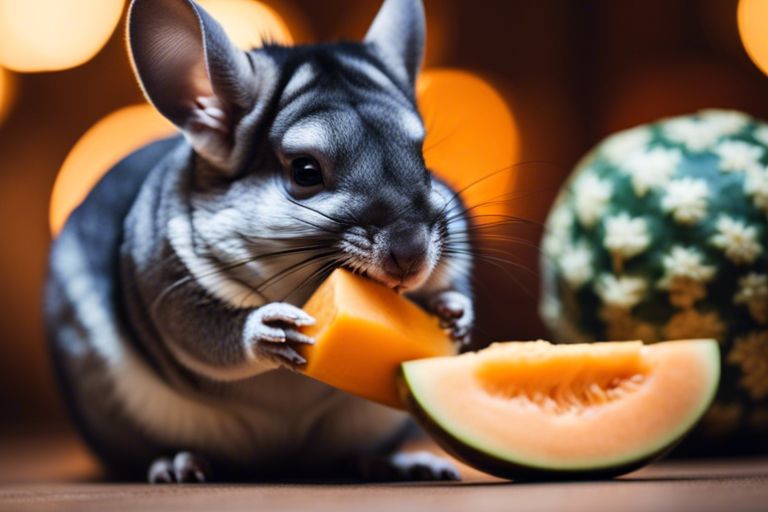
Can chinchillas eat cantaloupe? A tiny amount of fresh cantaloupe is not generally described as a toxic food for chinchillas, but it is not a necessary or recommended regular part of their diet. Veterinary guidance emphasizes a high-fiber diet built around grass hay, with fruit treated as an occasional extra rather than a staple.
Because cantaloupe is a sweet, watery fruit and chinchillas have sensitive digestive systems, the safest approach is to choose their normal hay and appropriate greens instead of making cantaloupe a routine treat. There is also no widely established veterinary serving size specifically for cantaloupe, so it is better not to invent a precise portion.
Can Chinchillas Eat Cantaloupe?
There is an important difference between “not known to be poisonous” and “recommended as part of the diet.” Cantaloupe falls into the first category more comfortably than the second.
The Merck Veterinary Manual says chinchillas can have occasional fruit such as a small slice of fresh apple or pear, while fruit should remain less than 10% of the diet. VCA similarly says treats are not required and recommends only occasional fresh greens or a piece of high-fiber fruit such as apple. Neither source specifically recommends cantaloupe.
So, if you are wondering whether cantaloupe should become a regular chinchilla treat, the answer is no. Their everyday diet should stay focused on foods that provide the fiber they need.
Why Cantaloupe Is Not a Good Everyday Food
Cantaloupe is very different from the grass hay that makes up the foundation of a healthy chinchilla diet. It is a soft, sweet fruit with much more water and naturally occurring sugar than hay.
That does not automatically make a small piece dangerous, but it does make cantaloupe a poor substitute for the foods chinchillas are designed to eat regularly. Oxbow’s chinchilla care guidance recommends that fresh grass hay make up at least 70% of the diet and explains that hay provides long-strand fiber for digestive health and tooth wear.
- Low in dietary fiber compared with hay: Chinchillas need long-strand fiber every day.
- Sweet: Fruit is a treat, not a nutritional foundation for a chinchilla.
- High in water: A sudden introduction of watery fresh food can be harder on a sensitive digestive system.
- Not necessary: A healthy chinchilla does not need cantaloupe to obtain essential nutrients when fed an appropriate diet.
What Veterinary Guidance Says About Fruit
Current veterinary guidance is more useful than simply labeling individual fruits as “safe” or “unsafe.” Merck recommends occasional fresh fruit while keeping fruit below 10% of the overall diet and warns that sudden food changes can cause digestive problems. VCA also recommends only occasional fruit and says new diet changes should be introduced gradually.
Oxbow takes a similarly conservative approach. Its small-pet nutrition guidance describes fruit as a treat rather than a required part of a chinchilla’s diet and recommends keeping treats limited. Its chinchilla care guide emphasizes unlimited grass hay as the foundation of the diet.
This means you should think of cantaloupe as an optional food, not something your chinchilla needs for hydration, vitamins, or variety.
If You Decide to Offer Cantaloupe
If your veterinarian is comfortable with your chinchilla having a small amount of fresh fruit, keep the approach conservative:
- Use fresh cantaloupe only. Do not use dried, candied, canned, or sweetened melon.
- Remove the rind and seeds. Offer only the soft flesh.
- Keep the amount very small. There is no well-established veterinary serving size specifically for cantaloupe, so avoid relying on a large “recommended piece” from an internet article.
- Introduce it slowly. Sudden dietary changes can cause soft or sticky droppings and gas in chinchillas.
- Watch the droppings and appetite. Stop offering the food if you notice digestive changes or your chinchilla seems unwell.
- Do not let fruit replace hay. Fresh grass hay should remain available every day.
Can Chinchillas Eat Cantaloupe Seeds or Rind?
No. There is no nutritional reason to give a chinchilla the rind or seeds. If cantaloupe is offered at all, remove these parts and provide only a small amount of the flesh.
More importantly, avoid turning the fruit into a “foraging meal” containing seeds, nuts, grains, or other extras. VCA specifically advises against feeding chinchillas seeds, nuts, and grains, while Merck also recommends avoiding these foods.
What Should a Chinchilla Eat Instead?
The safest everyday diet is much simpler than a fruit-heavy diet:
- Grass hay: The main source of long-strand fiber and an important part of dental health.
- Species-appropriate chinchilla pellets: Feed the amount recommended for your chinchilla’s age and condition.
- Appropriate fresh greens: Offer suitable vegetables in moderation rather than relying on sweet fruit.
- Fresh water: Keep clean drinking water available at all times.
- Treats: Keep them small and occasional.
For a broader overview, see our guide on what chinchillas can and cannot eat.
What If My Chinchilla Already Ate Cantaloupe?
If your chinchilla has eaten a tiny amount of fresh cantaloupe, do not assume that an emergency has occurred simply because it ate fruit. Remove any remaining fruit and return to its normal diet.
Monitor eating, drinking, activity, and droppings. Merck notes that chinchillas can develop digestive problems after sudden food changes, including wet or sticky droppings and gas. If your chinchilla develops significant diarrhea, stops eating, becomes unusually lethargic, or otherwise appears ill, contact an exotic-animal veterinarian promptly.
Final Verdict
Can chinchillas eat cantaloupe? A tiny amount of fresh cantaloupe is not established as a toxic food, but it is not a recommended regular treat. Veterinary sources support keeping fruit limited and making high-fiber hay the foundation of the diet.
If you want to give your chinchilla an occasional treat, follow your veterinarian’s advice and choose foods with established guidance rather than assuming every fresh fruit is equally suitable. When in doubt, hay, appropriate pellets, suitable greens, and fresh water are the safer foundation.