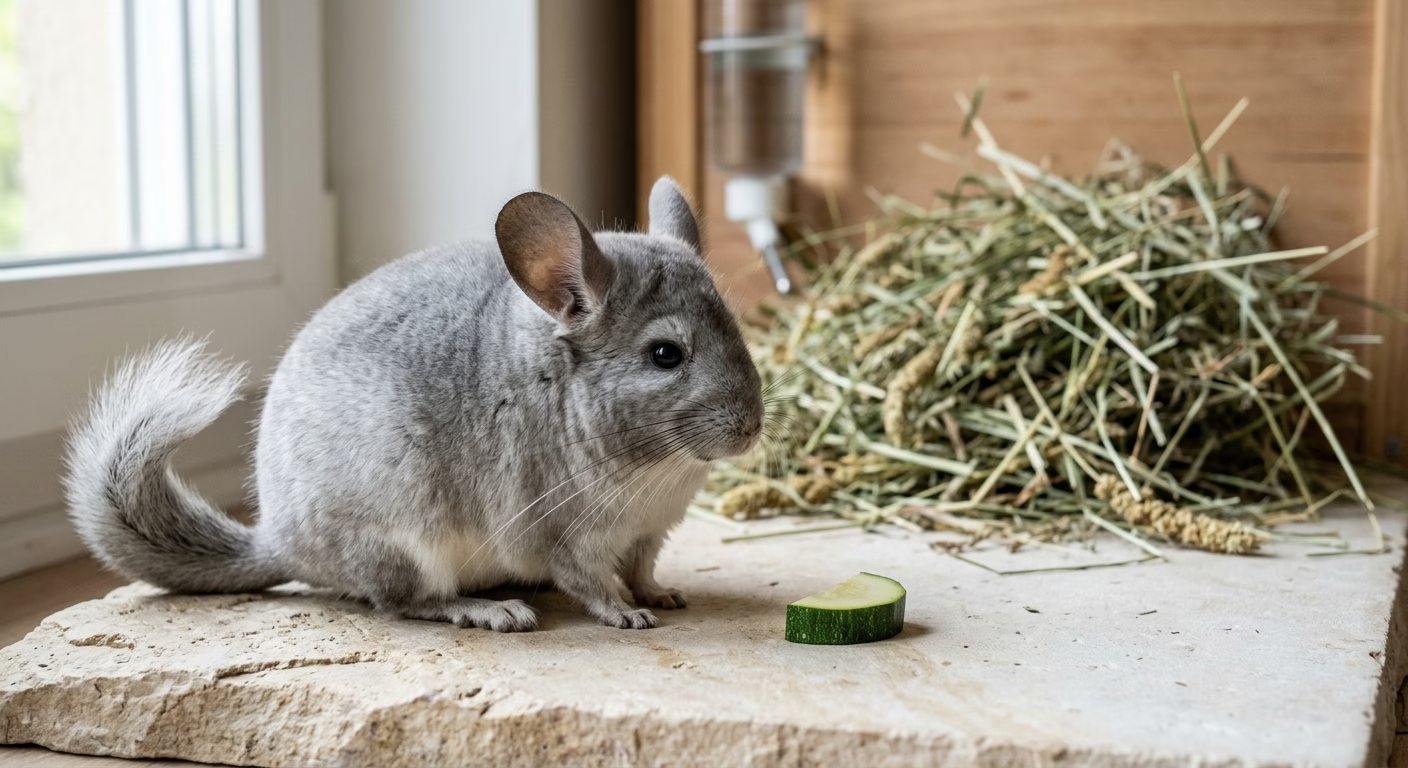
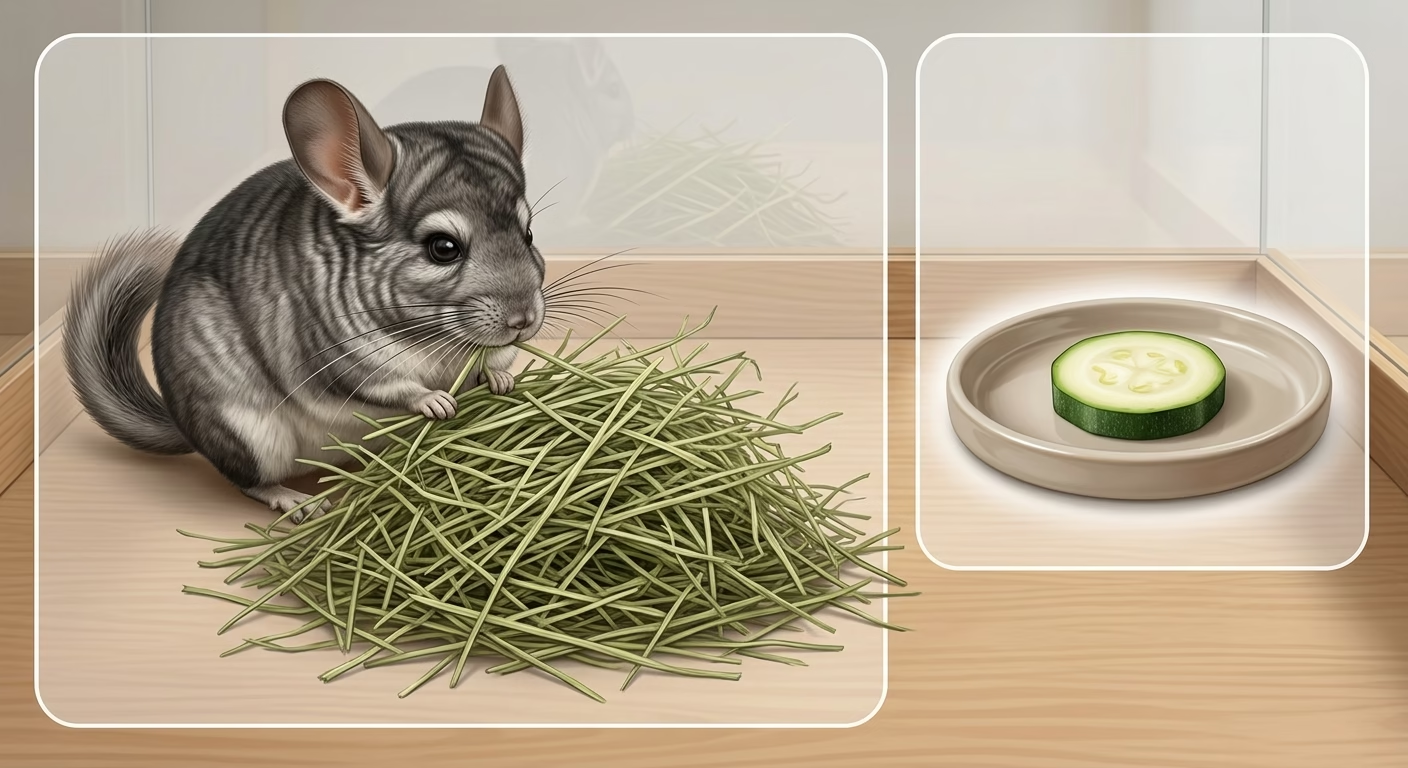
Quick answer: Zucchini is not specifically recommended in the veterinary guidance reviewed for chinchillas. Merck Veterinary Manual lists hay as the foundation of the diet and gives examples of vegetables that can be offered, but zucchini is not among the vegetables it specifically lists. RSPCA guidance likewise emphasizes hay and grass-based pellets, with treats kept limited. There is also no good veterinary evidence in the sources reviewed that zucchini is a chinchilla toxin.
Key Takeaways:
- Evidence is limited: The veterinary sources reviewed do not specifically recommend zucchini for chinchillas, so it should not be presented as a proven healthy treat.
- Rich in nutrients: Zucchini is a good source of vitamins and minerals such as vitamin C and potassium, which can benefit a chinchilla’s overall health.
- Monitor for digestive issues: While zucchini is safe for chinchillas, it is important to introduce it gradually and monitor for any signs of digestive upset, such as diarrhea.
Nutritional Value of Zucchini
Water Content and Fiber
Zucchini contains substantial moisture, but that does not make it a substitute for drinking water. Merck recommends constant access to fresh water, while hay remains the key source of dietary fiber. Human nutrition information about zucchini should not automatically be converted into a chinchilla-specific feeding recommendation.
Vitamins and Minerals
Zucchini contains vitamins and minerals, but the veterinary sources reviewed do not establish a specific health benefit from feeding zucchini to chinchillas. It is more accurate to distinguish what a food contains from what has actually been demonstrated to benefit this species.
The established priority is a high-fiber, hay-centered diet. Merck says chinchillas need fresh hay every day and warns that new foods should be introduced slowly because sudden changes can cause digestive problems.
Chinchilla Dietary Needs
High-Fiber Diet Requirements
You, as a chinchilla owner, must ensure that your furry friend’s diet is high in fiber. Fiber is crucial for maintaining good digestive health in chinchillas. Make sure their diet consists of hay, such as Timothy hay, which helps in maintaining proper gut function and preventing digestive issues.
Limited Sugar Intake
An important aspect of your chinchilla’s diet is ensuring limited sugar intake. Chinchillas have sensitive digestive systems and are prone to health issues if fed sugary foods. Fruits and vegetables with high sugar content should be given sparingly to prevent digestive disturbances and obesity in chinchillas.
It is crucial to monitor your chinchilla’s diet closely and provide them with a balanced and low-sugar diet to ensure their well-being. While fruits and vegetables can be included in their diet as occasional treats, the main focus should be on hay and high-fiber pellets to meet their dietary requirements.
Can Chinchillas Digest Zucchini?
Starch and Sugar Breakdown
There is no evidence in the veterinary sources reviewed showing that chinchillas cannot digest zucchini specifically. The relevant concern is broader: chinchillas have sensitive digestive systems, and sudden dietary changes or inappropriate fresh foods can contribute to digestive problems.
Potential Gastrointestinal Issues
Merck notes that inappropriate fresh greens and sudden dietary changes can be associated with diarrhea and soft feces in chinchillas. That does not prove zucchini itself causes these problems, so avoid presenting zucchini-specific risks as established facts.
If a new food is introduced, make changes slowly and monitor appetite and droppings. If your chinchilla stops eating, becomes lethargic, develops significant diarrhea, or produces very few or no droppings, contact a veterinarian promptly.

Preparing Zucchini for Chinchillas
Washing and Slicing
There is no chinchilla-specific preparation method established in the veterinary sources reviewed because zucchini itself is not specifically recommended. If a veterinarian approves it for an individual chinchilla, follow their preparation and portion instructions rather than relying on a generic online serving rule.
Removing Seeds and Skin
The sources reviewed do not establish that zucchini seeds or skin are dangerous to chinchillas, nor do they provide a chinchilla-specific serving recommendation. Avoid inventing a precise preparation rule where evidence is unavailable. If your veterinarian recommends zucchini, ask how they want it prepared.
Feeding Zucchini to Chinchillas
Moderation is Key
After introducing zucchini to your chinchilla’s diet, remember that moderation is key. While zucchini can be a tasty treat for your furry friend, overfeeding can lead to digestive issues. Limit the amount of zucchini you offer to maintain a balanced diet.
Mixing with Other Foods
For mixing zucchini with other foods, it’s necessary to ensure a balanced diet for your chinchilla. Introducing too many new foods at once can upset their delicate digestive system. While zucchini can be a healthy addition, make sure to slowly incorporate it into their diet alongside their regular pellets and hay.
Potential Risks and Allergies
Intestinal Blockages
The veterinary sources reviewed do not establish zucchini as a cause of intestinal blockage in chinchillas. Do not present this as a known zucchini-specific risk. General digestive problems can occur when chinchillas receive inappropriate foods or undergo sudden diet changes.
Allergic Reactions
The veterinary sources reviewed do not establish a zucchini-specific allergy risk in chinchillas. Monitor for general signs of illness after any dietary change, but do not label ordinary digestive upset as an allergy without veterinary assessment.
If your chinchilla develops unusual symptoms after a new food, stop introducing additional foods and contact your veterinarian if the symptoms are significant or persistent. Merck advises veterinary attention for changes such as loss of appetite, diarrhea, no droppings, lethargy, or other signs of illness.
To wrap up
Bottom line: Zucchini is not a food ChinchillaNook can confidently recommend as a routine treat based on the veterinary evidence reviewed. It is not identified as a specific toxin, but the veterinary guidance is much clearer about what chinchillas need: plenty of grass hay, an appropriate chinchilla pellet, fresh water, and carefully managed fresh foods. When evidence for a particular vegetable is limited, keeping the diet simple and hay-centered is the more defensible approach.
Research & Further Reading
Merck Veterinary Manual: Diet for a Chinchilla — hay, pellets, fresh foods, treats and gradual diet changes.
Merck Veterinary Manual: Chinchillas — species overview, fiber requirements and digestive health.
Merck Veterinary Manual: Chinchilla Care Checklist — practical daily-care guidance.
RSPCA: What To Feed a Pet Chinchilla — hay-centered feeding and diet-change guidance.
RSPCA: Chinchilla Health & Welfare Tips — monitoring eating, drinking and droppings.
FAQ
Q: Can chinchillas eat zucchini?
A: Yes, chinchillas can eat zucchini in moderation. Zucchini is safe for chinchillas to consume and can be a healthy treat for them.
Q: How should zucchini be prepared for chinchillas?
A: Zucchini should be washed thoroughly and cut into small, bite-sized pieces before offering it to your chinchilla. Make sure to remove any seeds or tough skin that may be difficult for your chinchilla to digest.
Q: Can feeding too much zucchini be harmful to chinchillas?
A: Yes, feeding too much zucchini or any other vegetable can disrupt a chinchilla’s digestive system and cause issues like diarrhea. It is important to only offer zucchini as an occasional treat in small quantities to avoid any potential digestive problems.