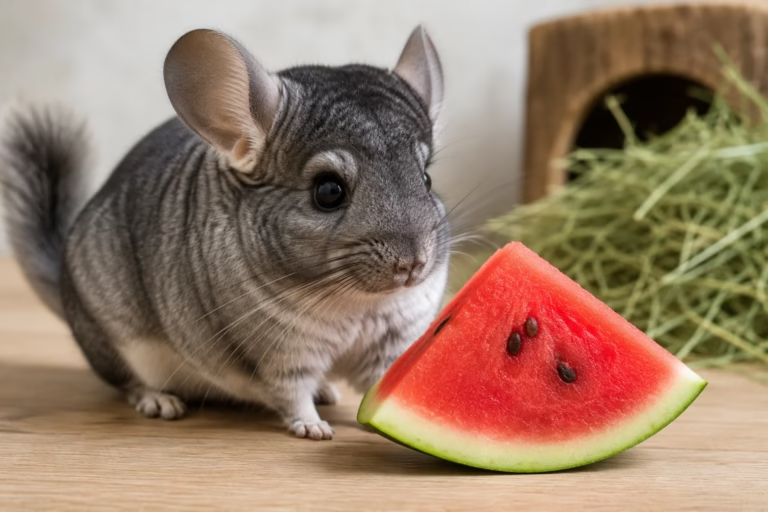
Can chinchillas eat avocado? No—avocado is best kept out of a chinchilla’s diet. The evidence does not establish avocado as a safe food for chinchillas, and veterinary references document avocado toxicity in several other animal species. With safer, species-appropriate foods available, there is no good reason to experiment with avocado.
The important nuance is that veterinary sources do not provide a well-established avocado dose specifically for chinchillas. So it would be misleading to claim that a particular amount is proven fatal to a chinchilla. The practical advice is simpler: do not intentionally feed avocado, including the fruit, skin, pit, leaves, or other plant material.
Can Chinchillas Eat Avocado?
No. Avoid feeding avocado to chinchillas. Merck Veterinary Manual’s current food-hazard guidance states that all parts of the avocado plant—the fruit, leaves, stems, and seeds—can cause poisoning in animals. Its professional toxicology reference explains that avocado contains persin and that avocado ingestion has been associated with serious effects in susceptible mammals and birds.
Chinchillas are not specifically listed among the species for which the current Merck avocado reference provides established toxicity data. That limitation matters: we should not invent a chinchilla-specific toxic dose or claim that the same outcome is guaranteed in every chinchilla. But the absence of a chinchilla-specific dose is not a reason to feed avocado.
Why Is Avocado a Food to Avoid?
Avocado contains a compound called persin. According to Merck, ingestion of avocado fruit, leaves, stems, or seeds has been associated with toxicosis in susceptible animals. The leaves are considered the most toxic part.
Merck’s food-hazard guidance also notes that avocado ingestion can cause heart-muscle injury in some mammals and birds. Other species can develop problems involving the mammary glands, respiratory system, or cardiovascular system. These findings are species-dependent, which is why they should not be copied directly into a chinchilla diagnosis.
For a chinchilla owner, the takeaway is practical: avocado is not a necessary food, its safety has not been established for chinchillas, and safer diet choices are readily available.
What About Avocado Flesh?
Do not assume that the green flesh is safe simply because it is the part humans commonly eat. Merck’s current food-hazard guidance says the fruit itself, as well as the leaves, stems, and seeds, can cause poisoning in animals.
So the old advice that you can remove the pit and skin and give a chinchilla a little avocado flesh is not something we recommend. There is no nutritional need for avocado in a chinchilla’s diet that would justify that uncertainty.
What About the Avocado Skin and Pit?
Avocado skin
Do not give the skin. Avocado plant material can contain persin, and the skin provides no benefit that a chinchilla needs.
Avocado pit
Do not give the pit. In addition to the toxicology concern, a hard, large object can create a physical choking or obstruction hazard. Chinchillas can choke when food or another object becomes lodged in the esophagus, and choking can become a life-threatening emergency.
Avocado leaves and stems
These should also be kept away from chinchillas. Merck identifies the leaves as the most toxic part of the avocado plant.
Does Avocado Have Any Nutritional Benefit for Chinchillas?
Avocado is nutritious for humans, but that does not make it appropriate for chinchillas. Chinchillas have different nutritional requirements, and their diet is built around high-fiber foods.
Merck recommends fresh long-strand grass hay every day because it supplies fiber and encourages the chewing needed for continuously growing teeth. It also recommends species-appropriate chinchilla pellets and limits fruit to occasional treats, with fruit making up less than 10% of the diet.
In other words, your chinchilla does not need avocado for its fats, vitamins, or minerals. Those are better addressed through an appropriate chinchilla diet.
What Should a Chinchilla Eat Instead?
- Grass hay: Keep fresh hay available every day. It is a major source of long-strand fiber and supports normal tooth wear.
- Chinchilla pellets: Use a species-appropriate, nutritionally complete pellet as directed for your pet.
- Suitable fresh greens and vegetables: Follow established chinchilla diet guidance rather than experimenting with unfamiliar human foods.
- Fresh water: Clean drinking water should always be available.
- Occasional treats: Keep treats limited. Merck lists small amounts of fresh apple or pear as examples of occasional fruit treats.
For a broader guide, see our article on what chinchillas can and cannot eat.
What If My Chinchilla Ate Avocado?
If your chinchilla has eaten avocado, do not try to diagnose the risk from the amount alone. Species-specific toxicity information is limited, and individual circumstances matter.
Remove any remaining avocado and contact an exotic-animal veterinarian for advice, especially if your chinchilla ate more than a tiny accidental amount or consumed the pit, leaves, or other plant material.
Watch for signs of illness such as reduced appetite, lethargy, diarrhea, abnormal breathing, weakness, or reduced droppings. Chinchillas can deteriorate quickly when they stop eating, and gastrointestinal problems can become serious. If your chinchilla is having trouble breathing, is collapsed, or is not eating, seek urgent veterinary care.
Common Myths About Avocado and Chinchillas
“The avocado flesh is safe if I remove the pit.”
There is not enough chinchilla-specific evidence to support that claim. Current veterinary food-hazard guidance includes avocado fruit among the plant parts that can cause poisoning in susceptible animals.
“A tiny amount cannot hurt.”
We should not make a dose claim that has not been established for chinchillas. The safer approach is to avoid intentional exposure.
“Avocado is healthy because it is healthy for people.”
Human nutrition does not determine the correct diet for a chinchilla. Chinchillas need a high-fiber diet designed around their digestive and dental needs.
“Avocado is safe if it is ripe.”
Ripeness does not turn avocado into an established chinchilla-safe food. There is no nutritional reason to offer it.
Bottom Line
Can chinchillas eat avocado? No—avoid feeding it. Current veterinary references document avocado toxicity in several animal species and do not establish a safe avocado serving for chinchillas. Because avocado is unnecessary and safer foods are readily available, it is not worth treating your chinchilla as a test case.
Keep your chinchilla’s everyday diet centered on fresh grass hay, appropriate chinchilla pellets, suitable fresh foods, and clean water. If accidental avocado ingestion occurs, contact an exotic-animal veterinarian rather than relying on a supposed “safe amount” from an internet article.